
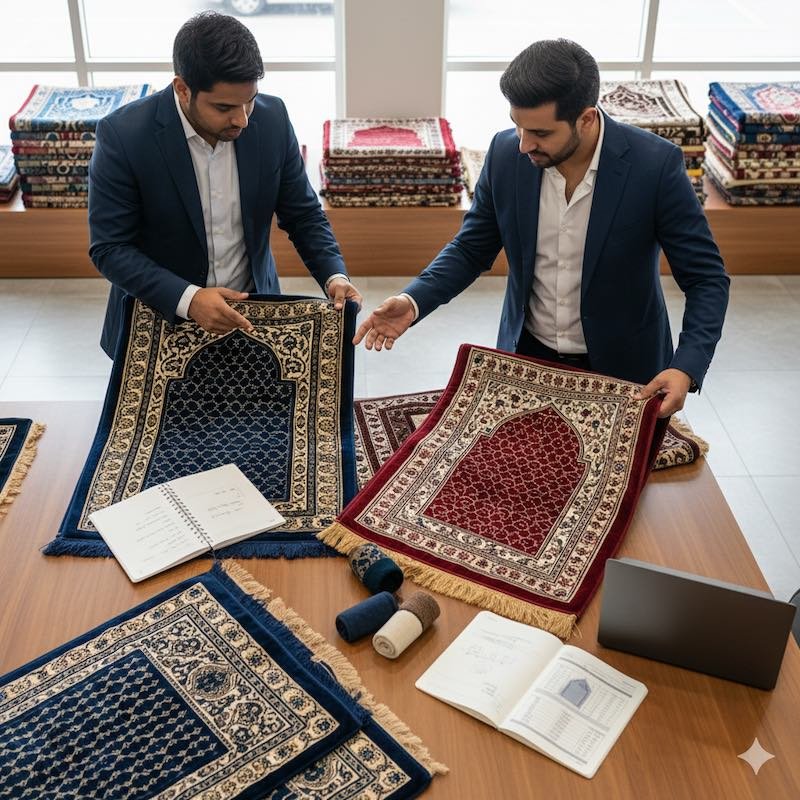

If you’ve ever wondered why some prayer rugs fly off shelves while others gather dust, you’re asking the right question. The difference isn’t just about price or availability—it’s about understanding the nuanced preferences of Muslim communities worldwide. From Jakarta’s bustling markets to Dubai’s luxury boutiques and European urban centers, successful prayer rug wholesalers know that sales come from aligning product qualities with cultural expectations. This guide reveals the insider factors that experienced buyers prioritize, helping you source rugs that don’t just occupy inventory space but actively drive revenue.
1. Material Quality: The Foundation of Customer Trust
Premium materials create immediate perceived value. For prayer rugs, this means more than just durability—it’s about tactile experience and spiritual resonance. High-density foam provides comfort during prolonged prayers, while breathable natural fibers like wool and cotton appeal to markets in humid climates. Quality construction signals respect for the prayer ritual itself, making material selection a critical sales determinant. Southeast Asian buyers often prioritize lightweight, quick-drying materials, while Middle Eastern markets may value luxurious wool blends with intricate weaving.
2. Design Authenticity Meets Modern Sensibility
Traditional geometric patterns and calligraphy borders remain essential, but successful designs adapt them to contemporary color palettes and minimalist aesthetics. The trend toward neutral tones (creams, soft grays, muted blues) allows prayer rugs to integrate with modern interior design while maintaining Islamic artistic principles. Younger Muslim consumers particularly appreciate designs that feel both culturally authentic and visually current—think traditional mihrab (prayer niche) shapes rendered in abstract, modern interpretations.
3. Cultural Sensitivity & Regional Preferences
What sells in Malaysia may not resonate in Morocco. Understanding regional variations is crucial for wholesale success. Indonesian markets often favor bright colors and batik-inspired patterns, while Gulf countries prefer more subdued tones with gold or silver thread accents. Western Muslim communities frequently seek designs that complement Scandinavian or contemporary interior styles. The most successful wholesalers maintain region-specific collections, recognizing that cultural sensitivity isn’t just respectful—it’s commercially smart.
4. Practical Features That Enhance User Experience
Beyond aesthetics, practical features significantly influence purchasing decisions. Non-slip backing is essential for safety during prayer movements. Lightweight construction appeals to travelers and those who pray in multiple locations. Fold lines that create minimal creasing maintain the rug’s appearance over time. Some of the fastest-selling rugs incorporate subtle innovations: built-in Qibla compasses for travelers, antimicrobial treatments for hygiene, or eco-friendly materials that appeal to environmentally conscious consumers.
5. Packaging & Presentation: The Unseen Sales Driver
How a prayer rug is presented can dramatically affect its perceived value. Quality packaging—protective sleeves, elegant storage bags, or presentation boxes—transforms a functional item into a gift-worthy product. This is particularly important for Ramadan and Eid seasons, when prayer rugs are often purchased as gifts. Presentation also includes clear labeling of materials, care instructions, and authentication of design origins, all of which build buyer confidence and justify premium pricing.
Frequently Asked Questions: Prayer Rug Wholesale Insights
Q: What’s the ideal price range for wholesale prayer rugs?
Entry-level rugs typically wholesale for $8-15, mid-range at $16-35, and premium designs at $36-80+. Successful wholesalers maintain a mix across price points to serve different market segments and occasions.
Q: How important are certifications (halal, eco-friendly, fair trade)?
Increasingly important, especially for Western markets and younger consumers. Certifications provide assurance about material origins, production ethics, and quality standards, often justifying higher price points.
Q: What’s the minimum order quantity (MOQ) I should target?
For standard designs, aim for MOQs of 200-500 pieces per pattern. For premium or custom designs, 100-300 pieces is more realistic. Some manufacturers offer lower MOQs for mixed collections.
Q: How do seasonal trends affect prayer rug sales?
Ramadan typically drives 40-60% of annual prayer rug sales. Hajj season and Eid celebrations create secondary peaks. Successful wholesalers plan inventory 3-4 months ahead of these periods.
Sourcing Strategies for Consistent Quality
Building reliable supplier relationships is the cornerstone of sustainable wholesale success. Look for manufacturers with demonstrated expertise in Islamic design principles and the technical capability to execute complex patterns consistently. Consider diversifying your supplier base: one specializing in traditional hand-knotted rugs, another in machine-woven contemporary designs, and perhaps a third focusing on innovative materials. Regular quality audits and transparent communication about market feedback ensure your product offerings remain relevant and competitive.
The Art & Science of Prayer Rug Success
Successful prayer rug wholesaling combines artistic sensitivity with commercial acumen. It’s about understanding that these products serve both spiritual and practical needs—they’re tools for prayer that also reflect personal style and cultural identity. The most successful wholesalers listen closely to market feedback, adapt to evolving preferences, and maintain unwavering commitment to quality. They recognize that in the prayer rug business, trust is the ultimate currency: trust in materials, trust in design authenticity, and trust in the wholesaler’s ability to deliver products that honor both faith and contemporary life.
Ready to Source Smarter?
Explore our curated collection of premium prayer rugs, each selected for its balance of traditional craftsmanship and modern appeal. From lightweight travel rugs to luxurious home prayer carpets, our wholesale offerings are designed to meet the diverse needs of global Muslim markets while maintaining the high standards that define authentic Islamic artistry.