
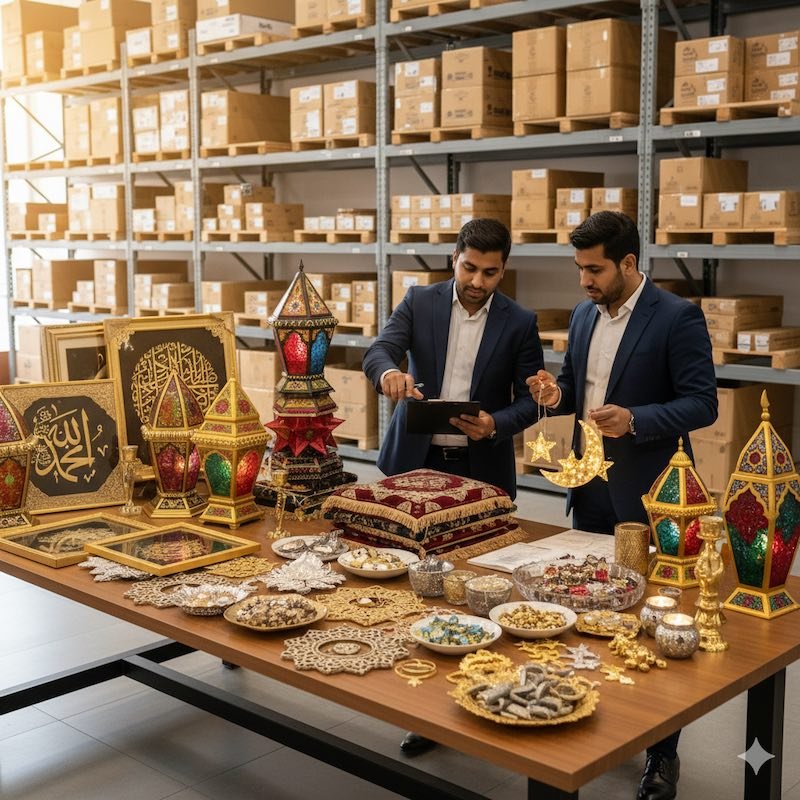
Eid decorations are a high-stakes category for wholesalers. The window is short — typically four to six weeks of strong demand — but the margins are real and the sell-through can be near-complete if you stock the right lines. Get it wrong and you are left with seasonal inventory that takes up space until next year. This guide helps wholesale buyers understand what moves, when to order, and how to avoid the most common stocking mistakes in Eid decorations wholesale.
The Two Eid Seasons and What Sells in Each
Eid al-Fitr and Eid al-Adha are distinct commercial events with different decoration profiles. Understanding both helps wholesalers plan inventory for two separate selling windows rather than one.
Eid al-Fitr is the larger retail occasion. Families celebrate the end of Ramadan with gatherings, gifting, and home decoration. Demand for lanterns, string lights, banner sets, table centerpieces, and gift wrapping materials peaks sharply in the final two weeks of Ramadan and continues through the Eid holiday itself.
Eid al-Adha drives a different decoration profile — more focused on gathering spaces, outdoor settings, and Islamic motifs linked to the sacrifice and pilgrimage seasons. Demand is generally lower in volume but loyal in repeat purchasing from retailers with established customer bases.
Top-Selling Decoration Categories
Crescent and star banners and garlands are visual anchors for Eid displays in homes, mosques, and event spaces. These sell in quantity to both retail and institutional buyers. Consistent quality in print clarity and durability distinguishes reliable suppliers from those whose products fade or tear after minimal use.
Ramadan and Eid lanterns (fanous) remain iconic across Middle Eastern, South Asian, and Western Muslim communities. Metalwork and glass versions attract premium buyers. Paper and plastic lanterns serve the mass market. Both segments move well when stocked ahead of the season.
Table decoration sets — centerpieces, candle holders, decorative plates — have grown steadily as Eid home hosting becomes a stronger cultural practice. These bundle well with Islamic crafts and home decor wholesale lines that wholesalers may already carry.
Eid gift packaging — decorative boxes, bags, ribbon sets, and greeting cards with Islamic motifs — generates consistent sales from retailers who offer gift-wrapping services. This category has a long pre-Eid sales window, often starting six to eight weeks before the holiday.
When to Order for Eid
The most costly mistake in Eid decorations wholesale is ordering too late. Manufacturers in China and Southeast Asia typically need eight to twelve weeks lead time for production and shipping. Wholesalers who place orders in time often secure better pricing and guaranteed stock allocation.
For Eid al-Fitr, plan to place orders no later than two months before the projected holiday date. For Eid al-Adha, the same lead time applies. Working backward from the Islamic lunar calendar to your order deadlines should be standard practice in your annual buying plan.
Regional Decoration Preferences
Decoration preferences vary significantly by market, and stocking for a specific region improves sell-through rates.
Gulf and Middle Eastern markets favor elaborate metalwork lanterns, gold-toned color palettes, and premium table settings. Southeast Asian markets respond to brightly colored banners, string lights, and affordable decorative sets suited for community gatherings. Western Muslim communities often prefer contemporary Islamic design — clean geometric patterns, neutral palettes — that blends with modern home aesthetics.
Avoiding Overstock After the Season
The biggest risk in Eid decorations is inventory that does not sell through before the holiday ends. A few practices reduce this risk substantially.
Anchor your range in non-perishable items — durable lanterns, reusable banners, quality metalwork — that retailers can sell across multiple Eid seasons without the product feeling dated. Limit highly seasonal disposable items unless you have firm commitments from buyers before ordering.
Offer retailers early-bird pricing for pre-season orders. This locks in purchase commitments and helps you size your order accurately, reducing the chance of being left with excess stock.
Frequently Asked Questions
How far in advance should retailers order Eid decorations from wholesalers?
Most retailers should place orders four to six weeks before Eid. Encourage your buyers to order early by offering pre-season pricing or exclusive design access for early commitments.
What packaging is best for Eid decoration wholesale?
Retail-ready packaging with Islamic motifs on the box increases perceived value. Pieces that arrive flat-packed or in display-ready formats reduce retailer handling time and improve shelf presentation.
Can Eid decorations be sold year-round?
Some items — quality lanterns, Islamic geometric decor, crescent wall art — transition from seasonal Eid pieces to permanent home decor. Highlighting this versatility to retailers extends the commercial window beyond the holiday itself.
Making Eid Decorations Work for Your Wholesale Business
Eid decorations reward wholesale buyers who plan ahead, stock the right categories, and build retailer relationships that generate pre-season commitment. The compressed selling window is an advantage, not a disadvantage — it means strong demand concentrated in a short period, which translates to fast inventory turnover when the range is right.
Review your stocking plan against last season’s sell-through data. Identify which items sold completely, which required markdown, and which you reordered mid-season. That data is the foundation of a stronger Eid decorations range next time.