
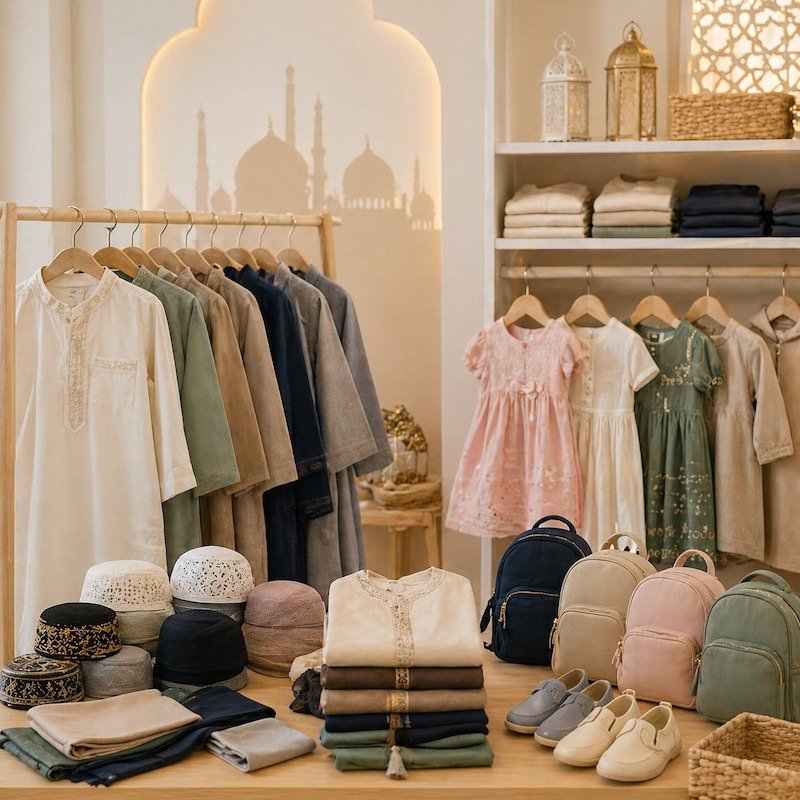
Islamic kids clothing wholesale is one of the most underserved corners of the Muslim fashion market — and that gap is closing fast. Parents across Southeast Asia, the Middle East, and Muslim communities in Europe are actively searching for quality modest clothing for children, from toddler abayas to boys’ thobes and everyday Islamic caps. If you’re a wholesaler or retailer looking to diversify your catalog, children’s Islamic apparel deserves a serious look.
Why Demand for Islamic Children’s Clothing Is Rising
The global Muslim population continues to grow, with a significant and youthful demographic base. Young parents today are more style-conscious than previous generations — they want their children to dress modestly but also look presentable at family gatherings, Eid celebrations, and everyday school life. This cultural shift is driving steady demand for well-designed, affordable Islamic children’s wear.
Seasonal spikes around Ramadan and Eid al-Adha create predictable high-volume windows for wholesalers. Smart buyers stock up 6–8 weeks before these periods to meet demand and avoid shipping delays.
Key Product Categories to Know
The Islamic children’s clothing market breaks down into several core segments worth understanding before you place your first order:
Girls’ abayas and dresses are perennial bestsellers, especially in sizes 2–12. Look for lightweight fabrics like viscose or chiffon blends that suit warm-weather markets. Lace trim and embroidered necklines tend to appeal to buyers in Gulf markets.
Explore our full range of Women’s Collection to see what styles translate well into children’s lines.
Boys’ thobes and kufis are essential for Friday prayers and Eid. White and off-white remain the top-selling colors year-round, while darker tones and embroidered versions move well ahead of special occasions.
Hijab undercaps for girls are a fast-growing accessory category. Many parents begin introducing modest dressing to girls aged 7–10, and soft cotton undercaps are a natural first purchase. Stock multiple colors to broaden appeal.
Islamic hats and caps for boys, including simple knit prayer caps and embroidered kufis, remain consistent sellers across all markets. Check our Prayer Cap collection for reference styles that can be adapted for children.
Fabric and Quality Standards That Matter
Parents buying children’s clothing prioritize softness, washability, and safety above all else. When sourcing Islamic kids’ apparel for wholesale, pay close attention to these factors:
Fabric composition: Cotton and cotton blends are the safest choice for children’s garments. Avoid fabrics that contain excessive synthetic content for items worn directly against the skin.
Needle detection certification: Any responsible manufacturer should provide needle detection test results. This is non-negotiable for children’s wear in regulated markets like the EU or Australia.
Colorfastness: Children’s clothing gets washed frequently. Dyes that bleed after two or three washes will generate refund requests and damage your reputation. Ask for wash fastness ratings before committing to a bulk order.
MOQ and Pricing Strategies for Wholesale Buyers
Children’s Islamic clothing typically comes with moderate minimum order quantities — often starting at 50–100 pieces per design. If you’re new to the category, start with a mixed-size assortment pack to test market response before committing to a full production run.
Pricing structures vary depending on product complexity. Simple cotton undercaps may cost as little as $1.50–$3.00 per unit at wholesale, while fully embroidered girls’ abayas can reach $8–$15 depending on fabric and detailing. Understand your local market’s willingness to pay before locking in your price point.
OEM and Private Label Opportunities
Many buyers overlook the OEM potential in children’s Islamic fashion. If your brand already has traction in adult modest wear, extending it to a children’s line under the same label is a logical step. Custom embroidery, brand labels, and color-matched packaging can all be arranged with a minimum order — typically 200–300 pieces per style.
When evaluating OEM suppliers, always request fabric swabs, pre-production samples, and photo documentation of the factory floor. Children’s wear requires stricter quality control than adult garments.
Frequently Asked Questions
What age ranges should I stock for Islamic children’s clothing?
Most wholesalers start with ages 2–12 (or size ranges 100–160cm). This covers the widest demand window. Toddler sizes (under 2) have niche appeal and often come with higher per-unit complexity.
Which markets have the highest demand for Islamic kids’ wear?
Indonesia, Malaysia, Saudi Arabia, the UAE, and Turkey are the primary volume markets. European Muslim communities in France, the UK, and Germany represent smaller but higher-margin opportunities.
How far in advance should I order for Eid?
For Eid al-Fitr and Eid al-Adha, plan your wholesale order 8–10 weeks ahead. Factory lead times for custom orders can run 4–6 weeks, and shipping adds additional time.
Are there certifications I need for selling children’s clothing in the EU?
Yes. The EU requires compliance with EN 14682 (drawstring safety), REACH chemical regulations, and CE marking for certain product types. Always confirm compliance documentation with your supplier before importing.
Building a Profitable Children’s Islamic Clothing Range
A well-curated children’s Islamic clothing assortment doesn’t need to be vast to be profitable. Start with three to five hero products — perhaps a girls’ abaya, a boys’ thobe, a prayer cap, and two or three undercap styles — and build from there based on sell-through data.
Source from manufacturers who understand the category deeply: suppliers who can advise on sizing for different regional body standards, who offer needle detection as standard, and who have experience exporting to your target markets. The right supplier relationship reduces your risk and shortens your time to market significantly.
Islamic children’s clothing is a category with real growth ahead of it. The wholesalers who move now — with quality products and reliable supply chains — will be well positioned as the market matures.