
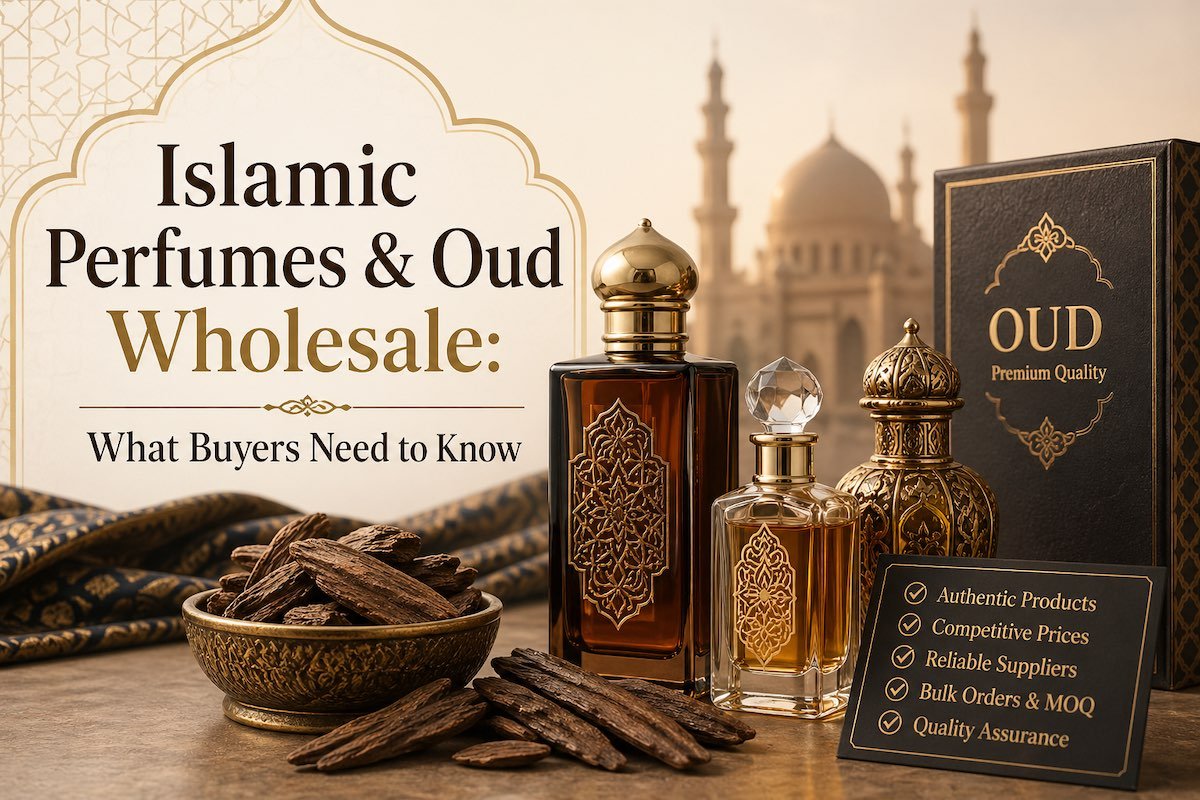
Walk into any Islamic marketplace and you’ll notice one thing immediately — fragrance is everywhere. From oud-scented prayer halls to attar-wearing worshippers, scent is woven into Muslim daily life and tradition. For wholesale buyers, this makes Islamic crafts and fragrance products one of the most consistently high-demand categories you can stock.
This guide breaks down exactly what you need to know before placing your first — or next — bulk order for Islamic perfumes and oud products.
Why Islamic Perfumes Sell Year-Round
Unlike seasonal products, Islamic fragrances move steadily throughout the year. Ramadan, Eid, Hajj season, and Friday prayers all drive gifting and personal use. Oud oil, attar (non-alcoholic perfumes), bakhoor (incense resin), and musk-based blends are staples that Muslim households repurchase regularly. Wholesale buyers who understand this cycle rarely get stuck with slow-moving inventory.
The Middle East leads global oud consumption, but demand is also surging in Southeast Asia, West Africa, and Western Muslim communities. If your customer base spans these regions, you’re looking at a genuinely borderless product.
Key Product Types to Know
Before you approach a supplier, get clear on the product categories:
- Pure Oud Oil (Dehn Al Oud) — Extracted from agarwood resin. The most premium category, priced by origin (Hindi, Cambodi, Malaysian). Small quantities, high margins.
- Attar / Ittar — Alcohol-free perfume oils with florals or musks as base. Widely used across all age groups. Mid-range price point with broad market appeal.
- Bakhoor — Compressed incense chips burned over charcoal. Extremely popular for home use and gifts. Lightweight, easy to ship.
- Oud Perfume Sprays — Alcohol-based or alcohol-free options. Faster-moving than pure oud oils due to lower price barrier.
- Musk Blends — White musk, black musk, and rose musk blends are crowd favorites with consistent reorder rates.
Sourcing: China vs. Middle East Suppliers
Most wholesale buyers face a choice: source from Middle Eastern originators or Chinese manufacturers who produce OEM fragrance products at scale.
Middle Eastern suppliers (UAE, Saudi Arabia, Oman) offer authentic, region-specific formulations and deep cultural knowledge. Minimum order quantities are often lower but per-unit pricing is higher. Quality is generally excellent for pure oud and traditional attars.
Chinese manufacturers offer competitive pricing for bakhoor, musk blends, and packaged attar sets. Custom branding, private label, and flexible MOQs make them practical for retailers building house brands. Quality control and ingredient transparency are the areas where you need to ask the right questions.
For most wholesale buyers, a mixed sourcing strategy works best — premium oud from Middle Eastern suppliers, volume fragrance products from vetted Chinese OEM factories.
What to Check Before Placing an Order
The fragrance category has some specific due diligence requirements:
- Alcohol content — Muslim consumers overwhelmingly prefer alcohol-free formulations. Confirm this explicitly, especially for attar and musk blends.
- Ingredient disclosure — Ask for a full ingredient list. Synthetic musks and animal-derived components (like ambergris) may be deal-breakers for some buyers or markets.
- Packaging compliance — If you’re importing to the EU or UK, fragrance products face specific labeling regulations (IFRA standards, allergen declarations). Source accordingly.
- Shelf life — Pure oud oils can last years. Attar and spray formats have a 2–4 year window typically. Match your order volumes to expected sell-through rates.
- Sample before bulk — Fragrance is subjective. Always sample before committing to a large order. What works in one market may not land in another.
Pricing and Margin Expectations
Margins in Islamic fragrance retail are strong. Bakhoor and attar sets commonly retail at 3–5× the wholesale price. Pure oud oil is lower margin per bottle but commands premium pricing. Gift packaging (especially for Eid and Ramadan) allows significant price premiums with minimal added cost.
At the wholesale level, expect:
- Bakhoor: $3–8/unit wholesale, retail $12–25
- Attar (6ml–12ml): $4–12/unit wholesale, retail $15–40
- Pure Oud Oil (3ml): $20–80/unit wholesale depending on origin
Packaging and Gift Set Opportunities
One of the highest-value moves in this category is curating gift sets. A bakhoor block, a small attar vial, and a musk blend — packaged in a velvet box — can be retailed at Eid or Ramadan for 2–3× the combined component price. OEM suppliers in China specialize in exactly this kind of custom packaging. Minimum orders for custom gift sets are typically 100–200 units.
FAQ
Q: Is oud wholesale profitable for small retailers?
A: Yes, even at small volumes. Premium oud products have high unit margins. Start with a curated selection of 4–6 SKUs rather than broad coverage.
Q: What’s the minimum order quantity for Islamic perfumes?
A: Varies widely. Attar oils can be sourced at 50–100 units per SKU. Custom bakhoor blends may require 200–500 units minimum.
Q: How do I verify alcohol-free status?
A: Request a Certificate of Analysis (CoA) from the supplier and check for ethanol on the ingredient list. Reputable suppliers provide this routinely.
Q: Can I private label Islamic perfumes?
A: Absolutely. Chinese OEM suppliers are set up for this. You’ll need to provide your brand assets and confirm product specifications. Lead time is typically 30–45 days for initial orders.
Final Thoughts
Islamic perfumes and oud products are one of the most culturally resonant wholesale categories available to Muslim market retailers. The combination of steady year-round demand, strong gift season spikes, and excellent margin potential makes this category worth building out properly. Start with clear product specifications, verify alcohol-free status with your supplier, and sample before you scale. The fragrance category rewards buyers who do their homework.