
Every year, millions of Muslims perform Hajj and Umrah — and every one of them needs to be equipped. The pilgrimage supplies market is one of the most predictable and seasonally defined wholesale opportunities in Islamic goods. If you’re not stocking Hajj and Umrah products ahead of season, you’re leaving a reliable revenue stream on the table.
This guide covers what to stock, when to order, and how to source smart for the pilgrimage supplies category.
Understanding the Pilgrimage Calendar
Timing your inventory is everything in this category. Umrah is performed year-round, but demand spikes sharply in Ramadan — many Muslims choose to perform Umrah during the holy month. Hajj is fixed to the Islamic lunar calendar (Dhul Hijjah), meaning it falls approximately 10–11 days earlier each solar year. Retailers should begin stocking 6–8 weeks before each peak period. Missing the window means sitting on unsold inventory.
Core Product Categories
The pilgrimage supply category breaks down into several distinct product groups:
Ihram Clothing
The two-piece white unsewn garment worn by male pilgrims during Hajj and Umrah. Men’s Islamic clothing suppliers often carry ihram cloth alongside their regular lines. Key specs: terry cotton or waffle-weave fabric, typically sold in sets with a belt and safety pins. Sizing runs to fit adult males. MOQ typically 50–100 sets per supplier.
Prayer Essentials
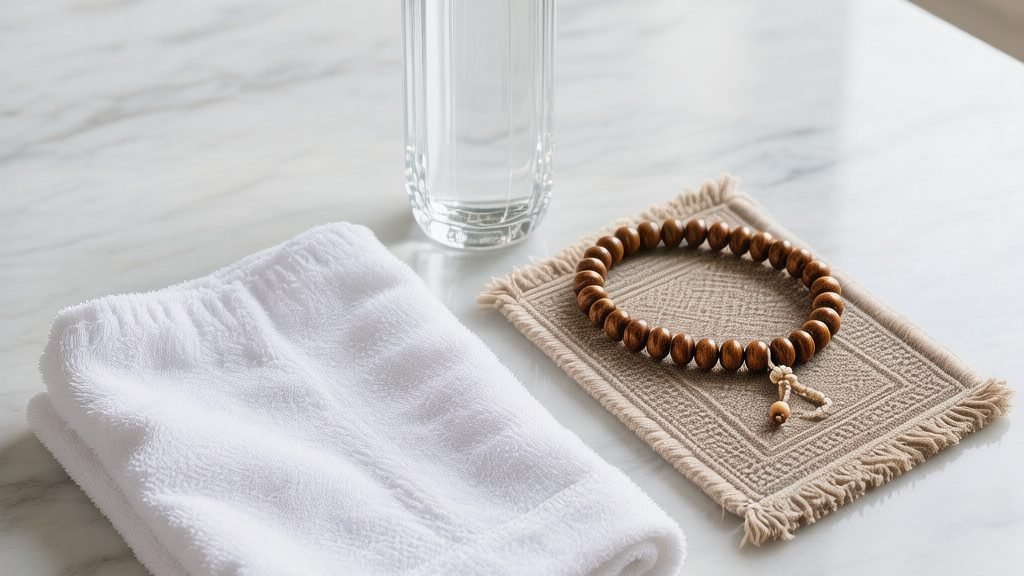
Compact prayer mats, pocket Quran editions, tasbih beads, and travel prayer sets are all high-movers in the pilgrimage context. Pilgrims prefer lightweight, compact versions of these products — bulk versions designed for home use are too heavy to carry. Source specifically for travel applications.
Zamzam Accessories
Zamzam water bottles and containers are pilgrimage staples. Clear, food-grade bottles with Islamic labeling sell consistently. Gift sets combining a Zamzam bottle with a small prayer mat or tasbih are popular Hajj gift items.
Pilgrimage Bags & Pouches
Waist bags, neck pouches for passports and valuables, and small cloth bags for tasbih are standard kit for pilgrims. These items are bought in volume by travel agents, tour operators, and Islamic gifting services as standard-issue items for pilgrimage packages.
Hajj Gift Sets
Returned pilgrims traditionally bring gifts. Pre-assembled gift sets — typically including dates, tasbih, a small Quran, and a scent product — are high-volume sellers in the weeks following Hajj season. Tour operators and community organizations often order these in bulk for distribution.
Where to Source Hajj & Umrah Products
China is the dominant manufacturing source for most pilgrimage accessories — compact prayer mats, tasbih, travel sets, and bags. Quality has improved dramatically over the past decade, and OEM production allows retailers to add custom branding (useful for tour operators building branded pilgrimage packages).
For ihram cloth specifically, suppliers in India and Pakistan have traditionally dominated the market, with Egyptian cotton versions at the premium end. Chinese terry-weave ihram is available at lower price points and is widely accepted.
Saudi Arabia and UAE-based distributors are the natural source for Zamzam accessories and dates. Importing Zamzam water itself requires specific regulatory compliance depending on your market — check before you commit.
Stocking Strategy for Wholesalers
A few principles that experienced pilgrimage supply buyers follow:
- Core range stays lean — Ihram sets, compact prayer mats, tasbih, and Zamzam bottles are your core 4 SKUs. Everything else is seasonal add-on.
- Gift sets are margin drivers — Assembly cost is minimal. Sell components individually and as bundled gift sets. The same products sell at different price points.
- Tour operators are your B2B target — They buy in volume, need consistent quality, and reorder annually. Build these relationships early.
- Post-Hajj clearance plan — Some pilgrimage-specific SKUs (like ihram sets) have limited off-season demand. Plan your order quantities to match peak-period sell-through rather than overstocking.
Quality Considerations
Pilgrimage is spiritually significant — customers will remember if a product failed them during Hajj. Check fabric durability on ihram cloth before ordering. Test compact prayer mat stitching (travel mats get folded and unfolded repeatedly). Source tasbih with smooth-turning beads and robust knotting. The quality bar in this category matters more than in standard gifting.
FAQ
Q: When should I place orders for Hajj season?
A: 8–10 weeks before the Hajj dates. For Umrah Ramadan demand, order 6–8 weeks before Ramadan begins.
Q: Can I sell Hajj products outside the pilgrimage season?
A: Yes. Prayer essentials and gift sets sell year-round. Ihram-specific items are the most seasonal. Consider bundling slow-moving seasonal items into gift sets.
Q: What MOQ should I expect for pilgrimage accessories?
A: Chinese suppliers typically quote 50–200 units per SKU for standard items. Custom packaging or OEM branding usually requires 100–300 units minimum.
Q: Are tour operators good wholesale customers?
A: Excellent. They have predictable annual purchasing cycles, need consistent quality, and often want OEM-branded products. Build these relationships — they become reliable repeat buyers.
Final Thoughts
The Hajj and Umrah supplies market rewards buyers who plan ahead and understand the pilgrimage calendar. Build a lean core range, add margin through gift set assembly, and target tour operators for B2B volume. This is a category where relationship-driven wholesale consistently outperforms generic retail — get your timing right, source quality products, and you’ll have customers that return every season.