
5 Islamic Product Trends Reshaping Wholesale in 2026
The Islamic goods market has shifted dramatically over the past two years. What sold well in 2023 doesn’t necessarily move today, and wholesale buyers who rely on last year’s bestseller lists are leaving money on the table. Based on trade data, retail feedback, and emerging consumer behavior across key markets, here are five trends that every Islamic goods wholesaler should be watching this year.
1. The Rise of Sustainable Islamic Products
Eco-consciousness has reached the Muslim consumer market in a meaningful way. Buyers — particularly in Europe, North America, and urban Southeast Asia — are actively seeking products made from sustainable materials. Bamboo prayer mats, organic cotton hijabs, recycled material tasbih, and biodegradable packaging are no longer niche offerings.
This trend isn’t limited to premium segments. Mid-market consumers are willing to pay a 10–15% premium for verifiable sustainability claims. Wholesalers who can source products with credible eco-certifications or transparent supply chains will find eager retail partners. The key is authenticity — greenwashing is quickly called out in Muslim consumer communities, where ethical trade is already a strong cultural value.
2. Premium Packaging as a Growth Driver
The gift economy around Islamic products has always been significant — Ramadan, Eid, Hajj, and wedding seasons drive substantial gift-oriented purchases. But in 2026, packaging quality has become almost as important as the product itself.
Retailers report that products in branded, Instagram-worthy packaging sell 2–3x faster than equivalent products in plain boxes. Velvet-lined Quran cases, magnetic-closure prayer bead boxes, and embossed candle holders are commanding premium shelf space. For wholesalers, this means offering packaging options alongside products — or working with suppliers who already invest in presentation.
3. Digital Integration in Traditional Products
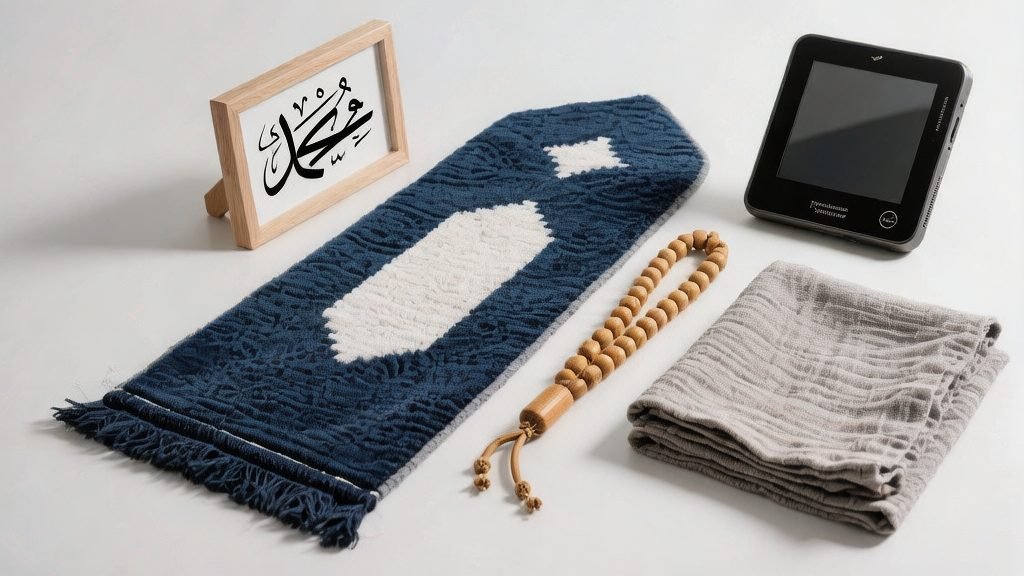
The biggest growth category isn’t entirely new products — it’s traditional products with digital features. Digital tasbih counters that sync with smartphone apps, Quran speakers with Bluetooth and translation features, and smart prayer time clocks are bridging the gap between tradition and technology.
This trend is strongest among younger Muslim consumers (18–35) in urban markets across all regions. These products command higher price points ($20–80 at retail) and have strong gift appeal. Wholesalers should look for suppliers who combine reliable electronics with authentic Islamic design aesthetics — tech-forward products that look generic or “Western” with Arabic text added as an afterthought don’t perform well.
4. Minimalist Islamic Home Decor
The heavy, ornate Islamic art style that dominated home decor for years is giving way to something cleaner. Minimalist Arabic calligraphy wall art, neutral-tone prayer mat designs, and simple geometric patterns are trending strongly, particularly among younger homeowners and expatriate Muslim professionals.
Materials are shifting too — from heavy brass and gold-plated frames to brushed metal, canvas prints, and natural wood. This aesthetic crossover appeals beyond the Muslim market, which means wider retail distribution opportunities. Home decor chains and lifestyle stores that wouldn’t carry traditional Islamic art are open to minimalist variants. For wholesalers, this trend expands the potential customer base significantly.
5. Diversification Beyond the Hajj and Ramadan Peaks
Historically, Islamic goods wholesale has been highly seasonal — 50–60% of annual revenue concentrated in Ramadan and Hajj periods. But successful wholesalers in 2026 are actively building year-round demand through product diversification.
This means expanding into adjacent categories: Islamic fashion for daily wear (not just occasion wear), children’s educational products, health and wellness items (like Zamzam water bottles, herbal Miswak products), and everyday home fragrance (not just Bakhoor for special occasions). Retailers who stock a broader, everyday-oriented range report 30–40% less revenue volatility compared to seasonal-only businesses.
What This Means for Buyers
The common thread across all five trends is quality and intentionality. The era of buying the cheapest available product and moving volume is fading. Consumers — even budget-conscious ones — are making more informed choices, and retailers are responding by upgrading their product mix.
For wholesale buyers, the strategy is clear: invest in understanding your end consumer, not just your retail client. Visit trade shows, monitor social media trends in your target markets, and build supplier relationships that can adapt quickly. The wholesalers who thrive in 2026 will be the ones who spot trends early and act on them, not the ones who wait to see what’s already selling.