
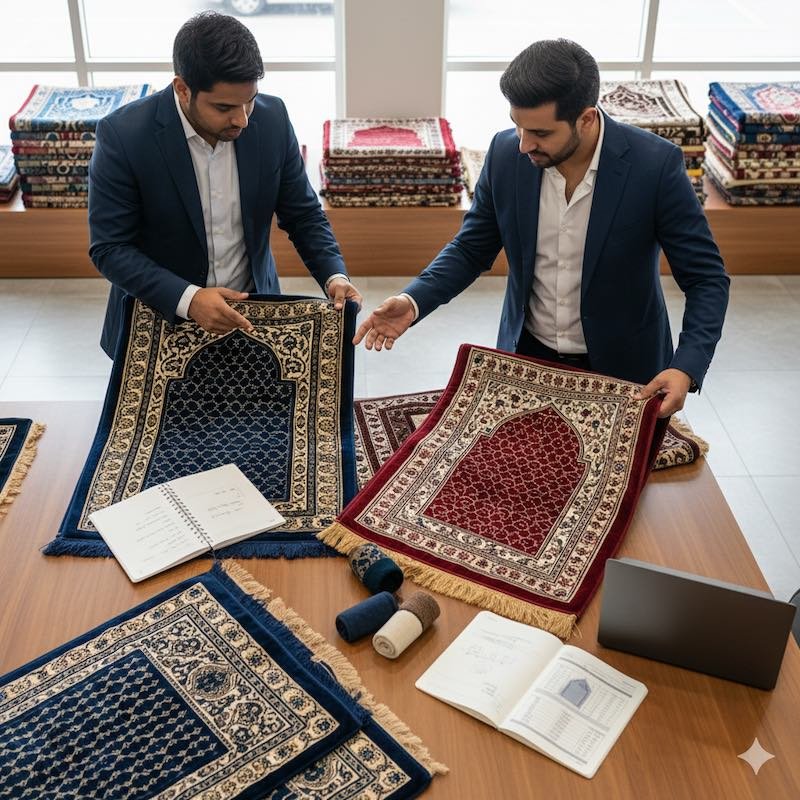
Multi-Channel Sourcing: The Islamic Wholesaler’s Pricing Edge in 2026
Walk into any wholesale market in Yiwu or Dubai and you will find buyers who source from exactly one channel. They use the platform they know, the agent they trust, or the trade show they attend every year. It feels safe. It is also expensive. In 2026, Islamic wholesale sourcing has become too fragmented for single-channel buying. The buyers getting the best margins are the ones mixing channels — and here is why.
Why One Channel Is a Margin Killer
When you only buy through one channel, you lose pricing leverage in three ways. First, your supplier knows you have no alternatives — they price accordingly. Second, you never see the price gaps between factory-direct, agent-brokered, and platform-listed goods. Third, you cannot benchmark shipping costs, minimum order quantities, or payment terms because you only hear one version of the deal.
An importer who only uses Alibaba for prayer mats might pay 15 to 20 percent more than one who also visits two trade fairs a year and maintains factory WeChat contacts. The difference is not the product — it is the information asymmetry.
Channel Mixing: What Works for Islamic Products
Not every channel suits every product category. Bulk commodities like plain prayer mats and basic tasbih beads benefit from factory-direct negotiation. Custom-decorated items, embroidered textiles, and premium gift sets work better through specialized agents who manage quality control and sampling. Trending seasonal products move faster when sourced through B2B platforms with ready inventory.
The key is matching the product type to the channel: factory direct for volume, agents for customization, B2B platforms for speed, and trade shows for relationship building. No single channel performs best across all four.
Online Platforms Are Just the Starting Point
Alibaba, Made-in-China, and DHgate are fine for initial price discovery. They are terrible for final price. Platform fees, listing costs, and verification charges add layers that factory-direct buyers skip. Use online platforms to build a shortlist — then take the conversation offline.
The most effective wholesale buyers use platforms to identify factories, then contact them directly through WeChat, WhatsApp, or in-person visits. A factory listing on Alibaba at $3.80 per unit for prayer beads often quotes $2.90 on WeChat — same factory, same product, zero platform markup.
Trade Shows: The Channel Where Deals Actually Close
Canton Fair, MIHAS in Kuala Lumpur, and the Dubai International Quran Competition Exhibition are where serious volume gets negotiated. Trade shows compress weeks of email negotiation into a 20-minute conversation. You touch the product. You read the supplier’s body language. You see their full catalog — not just what their Alibaba page shows.
More importantly, trade shows reveal supplier clusters. When you meet five tasbih manufacturers on the same exhibition row, you learn the real factory price in one afternoon. That knowledge alone pays for the flight.
Agent Networks: The Hidden Channel
Sourcing agents in Guangzhou, Yiwu, and Jakarta bridge the gap between factory direct and platform buying. They consolidate shipments, handle customs documentation, and manage quality inspections — services that first-time buyers rarely price correctly. A good agent charges 3 to 5 percent but saves you 10 to 15 percent through consolidated logistics and bulk shipping rates.
The best agents specialize. An agent who only handles Islamic textiles knows which factories produce consistent embroidery quality. One who handles electronics knows which Quran speaker manufacturers have the lowest defect rates. Generalist agents save less money because they learn on your shipment.
FAQ
Do I need to visit factories in person?
For your first order with a new factory, yes. Video calls help after you have established a relationship, but nothing replaces seeing production lines, raw material storage, and packing areas with your own eyes. Budget one trip per year to your primary sourcing region.
How do I verify a new supplier outside of platforms?
Three checks: demand their business license and cross-reference it on the national company registry, request video of their production floor with a specific object visible (proves the video is current), and ask for three client references who imported to the same region as you. If they hesitate on any of these, walk away.
Is it worth paying more for platform-verified suppliers?
Platform verification reduces risk, not price. For your first container from a new region, the 8 to 12 percent premium can be worth the dispute protection. After two successful orders, switch to direct negotiation with the same factory.
The Multi-Channel Formula
Start every new product category on a B2B platform to build a supplier shortlist. Take the top three offline for direct pricing. Visit one trade show per year in your primary sourcing region to validate ground-truth pricing. Build a relationship with one specialized agent for categories where you lack quality-control expertise. This four-channel approach takes time to build — but once it is running, your competitors paying single-channel prices will not understand how you undercut them on every quote.