
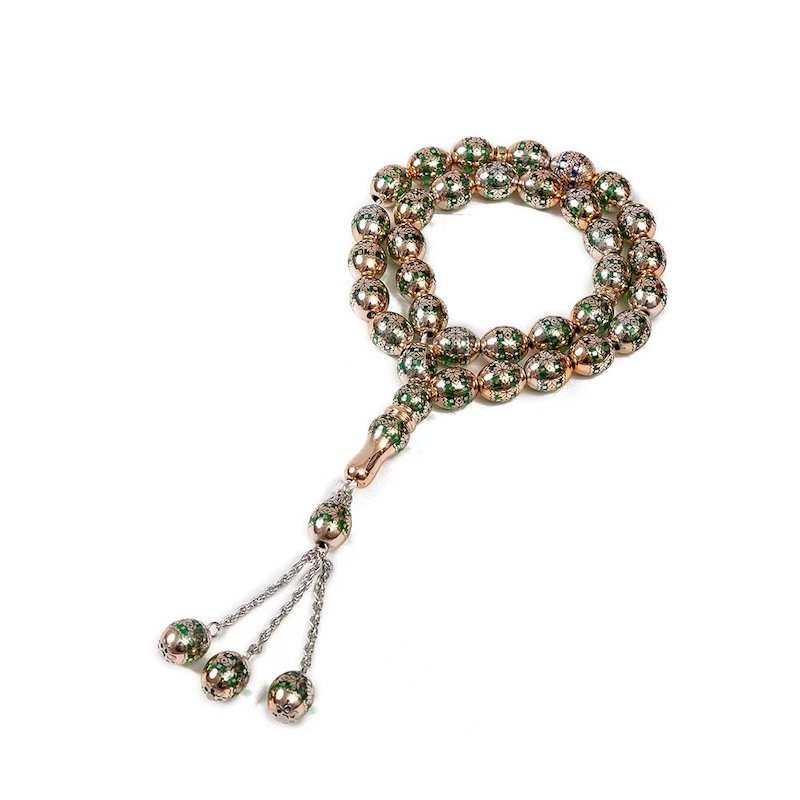
Why 33 Bead Tasbih Is Dominating the Wholesale Market Right Now
If you have been placing tasbih orders for the past few years, you have probably noticed a quiet but steady shift. The demand for 33 bead tasbih wholesale has grown faster than almost any other prayer accessory in the past 18 months. Retailers report quicker sell-through, lower return rates, and stronger repeat purchases compared with bulkier 99-bead options. Understanding why this is happening — and how to position your buying decisions around it — can make a real difference to your margins in 2026.
The Size Advantage Is a Business Advantage
A 33 bead tasbih is roughly one-third the length of its traditional counterpart. That physical reality translates directly into business benefits that smart wholesalers are already exploiting. Packaging costs drop because smaller boxes can be used. Shipping weight per unit falls, which matters enormously when you are moving pallets across continents. Display space in retail stores goes further when every tasbih does not need a full hook or a wide shelf slot.
Retailers also tell us that customers pick up a 33 bead piece, test the feel in their hand, and make a decision within seconds. The compact format lowers the psychological barrier to a spontaneous purchase. That impulse-friendly profile is exactly what a gift shop, an Islamic bookstore, or an online boutique needs to move volume quickly.
Who Is Actually Buying 33 Bead Tasbih
The customer profile for 33 bead tasbih has broadened considerably. Ten years ago, buyers were almost exclusively older men following a traditional dhikr practice that required counting to 33, 66, and 99 in sequence. Today the profile looks very different:
- Younger Muslim consumers who want a pocket-friendly prayer tool that fits an active lifestyle
- Converts to Islam who find the shorter string less daunting when learning dhikr
- Gift-givers who need an affordable, presentable item for Eid, graduation, or weddings
- Non-Muslim customers in wellness-focused markets who buy tasbih as a mindfulness or meditation tool
When your end customer base is this diverse, a wholesale buyer has a powerful story to tell retailers. You are not just selling prayer beads — you are stocking a product that crosses demographic lines and calendar seasons.
What to Look for When Sourcing
Not all 33 bead tasbih is created equal, and getting the specification right at the buying stage saves headaches later. Here are the key factors to evaluate when placing a 33 bead tasbih wholesale order:
Bead Material
Natural materials — amber, olive wood, sandalwood, and genuine stone — command the highest retail prices and have the lowest complaint rates. Plastic tasbih fills the entry-level market but tends to attract price-focused buyers who are slower to become loyal customers. If your target retailers serve a mid-market or gift segment, lean toward natural materials even if the unit cost is slightly higher.
String Quality
The string is the most common point of failure. Ask suppliers specifically about thread type, knotting method, and tensile strength testing. A tasbih that breaks after a week of use will generate returns and damage your relationship with the retailer. Nylon-core strings with silk or cotton outer wrapping tend to last significantly longer than pure cotton strings.
Bead Size Consistency
Uniform bead diameter is a mark of quality that experienced buyers check immediately. Inconsistent sizing feels sloppy in the hand and signals lower-grade manufacturing. When reviewing samples, roll the tasbih across a flat surface — any wobble reveals sizing irregularities.
Finish and Colour Stability
Dyed beads should not bleed onto the string or onto a customer’s palm after extended use. Request a simple rub test or soak test from the supplier before committing to a large order.
Pricing Tiers and MOQ Strategy
Most suppliers offering 33 bead tasbih at wholesale operate on three broad pricing tiers. Understanding which tier fits your business model prevents overspending on flexibility you do not need, or under-buying on price breaks that would significantly improve your margin.
Entry tier (200–500 units): Standard materials, limited colour options, moderate lead times. Suitable for new retailers testing the product category or buyers who want small seasonal restocks.
Mid tier (500–2,000 units): Wider material and colour choice, faster turnaround, sometimes packaging customisation included. The sweet spot for most mid-size wholesalers.
Premium tier (2,000+ units): Full custom specification, private label packaging, priority production slots, and the best per-unit costs. Realistic for buyers who have confirmed retail demand and want to build a proprietary product line.
Packaging That Sells Itself
A 33 bead tasbih presented in a simple velvet pouch retails for meaningfully more than the same product sold loose or in plain poly-bag packaging. The packaging is not just aesthetic — it signals quality to the end buyer and justifies a higher retail price, which in turn creates room for your wholesale margin. When evaluating suppliers, ask whether they can provide pouches, display boxes, or gift-ready formats at a quoted price rather than treating packaging as an afterthought.
Frequently Asked Questions
Is 33 bead tasbih always used to count to 33?
Traditionally, yes — a 33 bead tasbih is used to count each of three dhikr phrases 33 times, totalling 99 repetitions in a sitting. However, many buyers use it simply as a portable prayer tool and do not follow a specific counting practice. This flexibility broadens the retail market considerably.
What is a realistic MOQ for 33 bead tasbih wholesale?
Most suppliers set a minimum order quantity between 100 and 300 pieces for standard configurations. Custom colour or material orders typically start at 500 pieces. If a supplier is offering a very low MOQ with no restrictions, verify material quality carefully — corners are often cut to allow small minimums.
How do I differentiate my tasbih range from competitors?
Material choice, packaging presentation, and consistent quality are the three main levers. Offering a curated selection of two or three distinct material tiers — for example, basic acrylic, mid-range wood, and premium stone — gives your retail customers a clear upsell path rather than a confusing array of similar-looking products.
Are there seasonal demand spikes for 33 bead tasbih?
Yes. Ramadan and Eid al-Adha are the two largest demand periods, but significant secondary spikes occur around Hajj season, Islamic New Year, and gifting occasions like weddings and graduations. Building a forward order 10 to 12 weeks ahead of Ramadan is standard practice among experienced buyers.
Conclusion
The growth in 33 bead tasbih wholesale demand is not a fad — it reflects a genuine shift in how Muslim consumers approach prayer accessories. Compact, versatile, and gift-friendly, the 33 bead format fits modern retail realities better than ever. Buyers who understand the quality signals, price the tiers correctly, and present the product with thoughtful packaging will find this one of the more reliable performers in an Islamic goods catalogue. Start with a sample order, validate the quality in person, and build from there.