
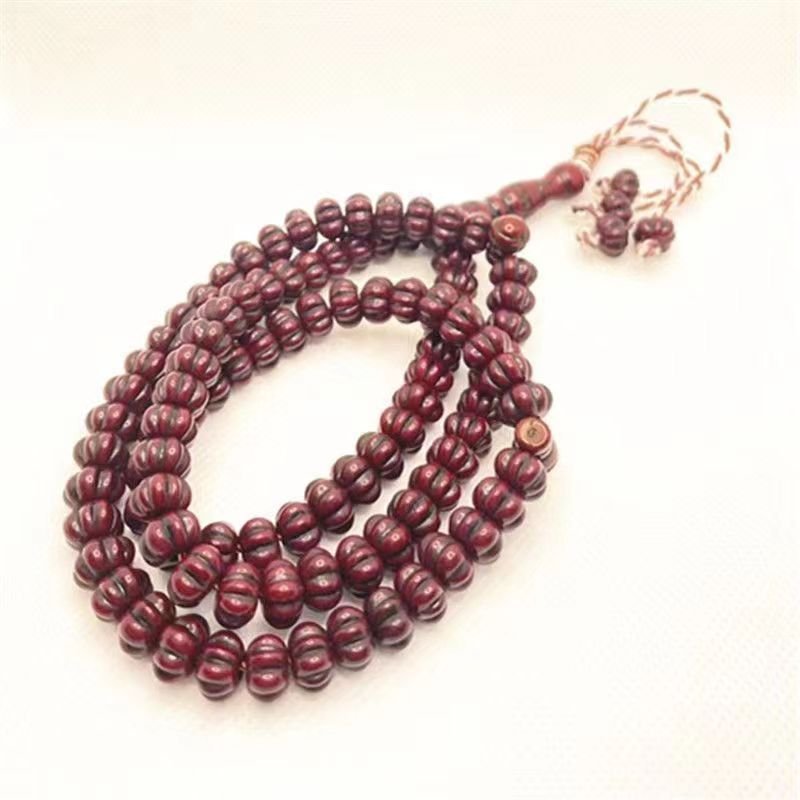
How to Source 99 Bead Tasbih That Wholesale Buyers Actually Reorder
Stocking 99 beads tasbih wholesale comes with a built-in challenge: this is the traditional standard, which means the market is flooded with mediocre options and price-sensitive competitors. Standing out requires more than checking a box in a supplier catalog. It means knowing what separates a repeat-seller from a shelf-sitter and building your sourcing process around those signals before your competitors catch on.
Understand Who Buys the 99 Bead Tasbih Today
The 99-bead buyer profile has quiet strength. Unlike the 33-bead crowd that skews younger and gift-oriented, the 99-bead customer frequently self-identifies as someone who makes a deliberate purchase. Mosques, Islamic schools, and dedicated practitioners form a reliable backbone of demand. These are institutional and personal buyers who value authenticity over novelty. They check bead material, weight, and hand-feel before anything else — and they notice when you cut corners.
That said, the buyer base is expanding. A growing share of 99-bead purchases now comes from independent retailers catering to converts seeking a complete starter prayer kit, as well as spiritual seekers in wellness-adjacent markets who perceive the full-length tasbih as more “serious” than shorter versions. Understanding this dual profile — traditional core plus expanding edge — tells you how to position your 99 beads tasbih wholesale inventory across marketing channels.
Pick Your Material Strategy First
Material is the single largest determinant of both your landed cost and your reorder rate. Sourcing strategists break the 99-bead market into three tiers, each with its own margin logic:
Natural Stone and Gemstone
Amber, turquoise, lapis lazuli, and agate command the strongest price premiums and the most loyal repeat buyers. They carry higher per-unit cost but tolerate significantly higher retail markups. Wholesalers who successfully run a gemstone-tier 99-bead line rarely compete on price at all — the quality signals are self-evident to the buyer who picks it up.
Hardwood and Olive Wood
Sandalwood, rosewood, and olive wood offer strong margins with broader affordability. These materials feel substantial in the hand, age with character, and appeal to the buyer who is willing to spend above basic acrylic but not quite enter the gemstone bracket. Olive wood sourced from the Levant carries additional provenance appeal that Middle Eastern retailers actively seek.
Synthetic and Acrylic
Polymer-based beads win on unit economics but lose on differentiation. They fill the bottom tier with high competition and thin margins, so wholesalers who enter this tier exclusively often find themselves trapped in a price war. The smarter play: carry a synthetic range as a loss-leader to open retail relationships, then upsell into wood or stone.
Inspect the Knot Work and Threading
A 99-bead tasbih demands roughly three times the knot count of a 33-bead equivalent. Loose knots, inconsistent spacing, or weak thread tension are the gremlins that quietly destroy your retailer relationships through returns and complaints. During sample review, pull each bead gently but firmly — if any bead slides, the entire batch is suspect. Experienced buyers in the Gulf market are particularly unforgiving about thread quality because they check for it on every single delivery.
Ask your supplier whether they use hand-knotting or machine-knotting, and importantly, whether the same craftsperson handles the full strand from start to finish. Continuity of hand during assembly produces a dramatically more consistent final product than assembly-line switching.
Set Your MOQ and Pricing Tiers Strategically
Supplier minimums for 99-bead tasbih typically run higher than their 33-bead counterparts because the longer strand consumes more material and assembly time. Expect a floor of 300 to 500 units for quality hardwood or stone options, and do not be surprised if gemstone-tier suppliers ask for 1,000-plus on the first order. This is normal. Treat the first order as a quality-validation batch, not a margin-maximization exercise — getting the product right matters more than squeezing the lowest unit cost on round one.
Price your wholesale tiers to reward volume clearly. A retailer ordering 50 units should see a visible step-down in per-unit cost when they reach 200 units, which encourages them to consolidate their orders with you rather than splitting across two suppliers. The math is simple: if your tier structure rewards loyalty, you build a predictable order pipeline instead of chasing one-off deals.
Package for the End Buyer, Not Just for the Shipment
A 99-bead tasbih wrapped in tissue and tossed into a poly bag signals commodity. The same product in a branded velvet pouch, a simple display box, or even a neatly folded kraft-paper sleeve with a subtle logo signals curation. Retailers who receive presentation-ready products save labor, reduce in-store damage, and are more likely to reorder from the same source. When you calculate landed cost, include packaging as a line item in your supplier negotiation — not as an afterthought. Even a $0.15 investment in packaging can justify a $1.50 increase in wholesale unit price because retailers perceive and pass on the value immediately.
Frequently Asked Questions
Is the 99-bead tasbih market declining?
It is not declining; it is stratifying. The bottom tier, dominated by generic acrylic options, is facing margin compression. The mid-tier and premium tiers, however, are growing steadily as buyers who prioritize quality concentrate their spending on fewer, better products. Position your catalog above the commodity threshold and the trend works in your favor.
What thread material performs best for 99-bead tasbih?
Nylon-core threads with a silk or high-grade cotton outer wrapping consistently outperform pure cotton across long-term wear tests. Nylon provides structural integrity; the outer layer provides feel. Avoid polyester-only threads — they are visually passable but tend to slip at knots during prolonged use.
How far in advance should I order before Ramadan?
For 99-bead tasbih, experienced wholesale buyers place orders 12 to 14 weeks before Ramadan. The longer bead count and higher quality expectations mean suppliers require more assembly time per unit compared to 33-bead models. Rushing a 99-bead production batch virtually guarantees quality compromises.
Conclusion
Sourcing 99 beads tasbih wholesale profitably is less about finding the lowest price and more about building a quality pipeline that retailers trust. Start with material tier selection that matches your buyer profile, validate thread and knot work with a hands-on sample review, build loyalty-driving pricing tiers, and present the product in packaging that sells itself. Wholesalers who treat the 99-bead tasbih as a curated offering rather than a commodity will find it remains one of the steadiest performers in the Islamic goods category, season after season.