
Your First Wholesale Order: A Buyer–Supplier Dialogue on MOQ, Lead Time & Mixed Containers
For many retailers, the hardest step is not choosing products — it is placing that first container order without overcommitting cash or shelf space. We sat down with a Southeast Asian shop owner (R) and our sourcing lead (S) to walk through how a balanced first order actually comes together.
Starting with the Anchor Product
R: I want to open a small Islamic lifestyle corner in my shop. Where do I even start with quantities?
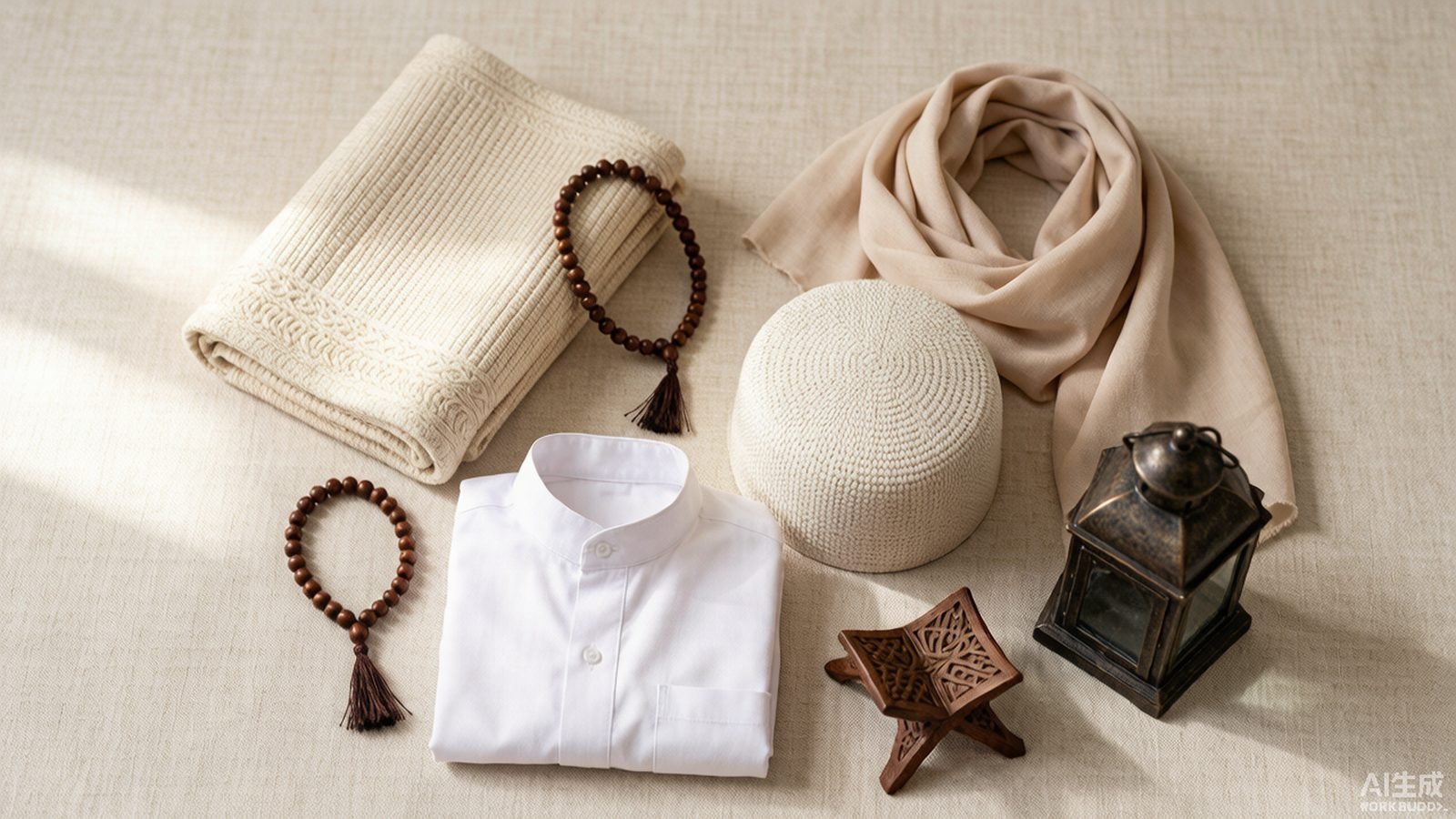
S: Start with the anchor. A folded cream prayer mat is the one item nearly every customer recognizes and trusts. Most first orders begin with 200–300 units of a single mat design, then branch out from there.
Minimums and Mixed Containers
R: That feels like a lot. What is the actual minimum?
S: Our MOQ on prayer mats is typically 100 per design, but mixing two designs gets you to a healthier 200-unit footprint without doubling your risk. That is where mixed containers earn their keep — you spread one shipment across several categories.
R: You mean I can combine mats with other ranges?
S: Exactly. A first container might hold prayer mats, a run of wooden tasbih, a batch of men’s thobes and kufi caps, plus a few hijabs for the women’s shelf. Consolidating lets you test what sells before committing to a full container of one line.
Timing Your Order
R: How long until it actually lands on my floor?
S: Production plus ocean freight runs roughly 30–45 days door-to-door for a mixed order. If you are targeting a seasonal window — say Ramadan — place the order 10–12 weeks out. Lead time, not MOQ, is usually the real constraint that catches first-time buyers.
Quality Without the Flight
R: I cannot fly out to inspect a factory. How do I trust the goods?
S: You do not have to travel. Ask for pre-shipment photos of the actual production run, not catalog shots. For mats, check seam alignment and the anti-slip backing. For thobes, verify stitch density at the shoulders and the neckline. A short video of a random unit from the finished batch tells you more than ten emails.
Payment That Protects You
R: And the money side — what is safe?
S: Standard terms are 30% deposit to lock production and 70% against the bill of lading. Never prepay 100% to an unverified supplier; that single habit causes more first-order losses than any product mistake. Use the deposit to secure your slot, then release the balance only when the goods are confirmed packed.
Three Takeaways for First-Time Buyers
Anchor first. Lead with one hero item your market already knows, then expand. Mix smart. A consolidated container teaches you demand across categories at lower risk. Protect cash. Deposit-plus-balance terms keep you in control from order to arrival.
A smart first order is rarely the biggest one — it is the one that teaches you your market. Mix your categories, keep deposits sane, and let the reorders tell you exactly what to scale next season.