
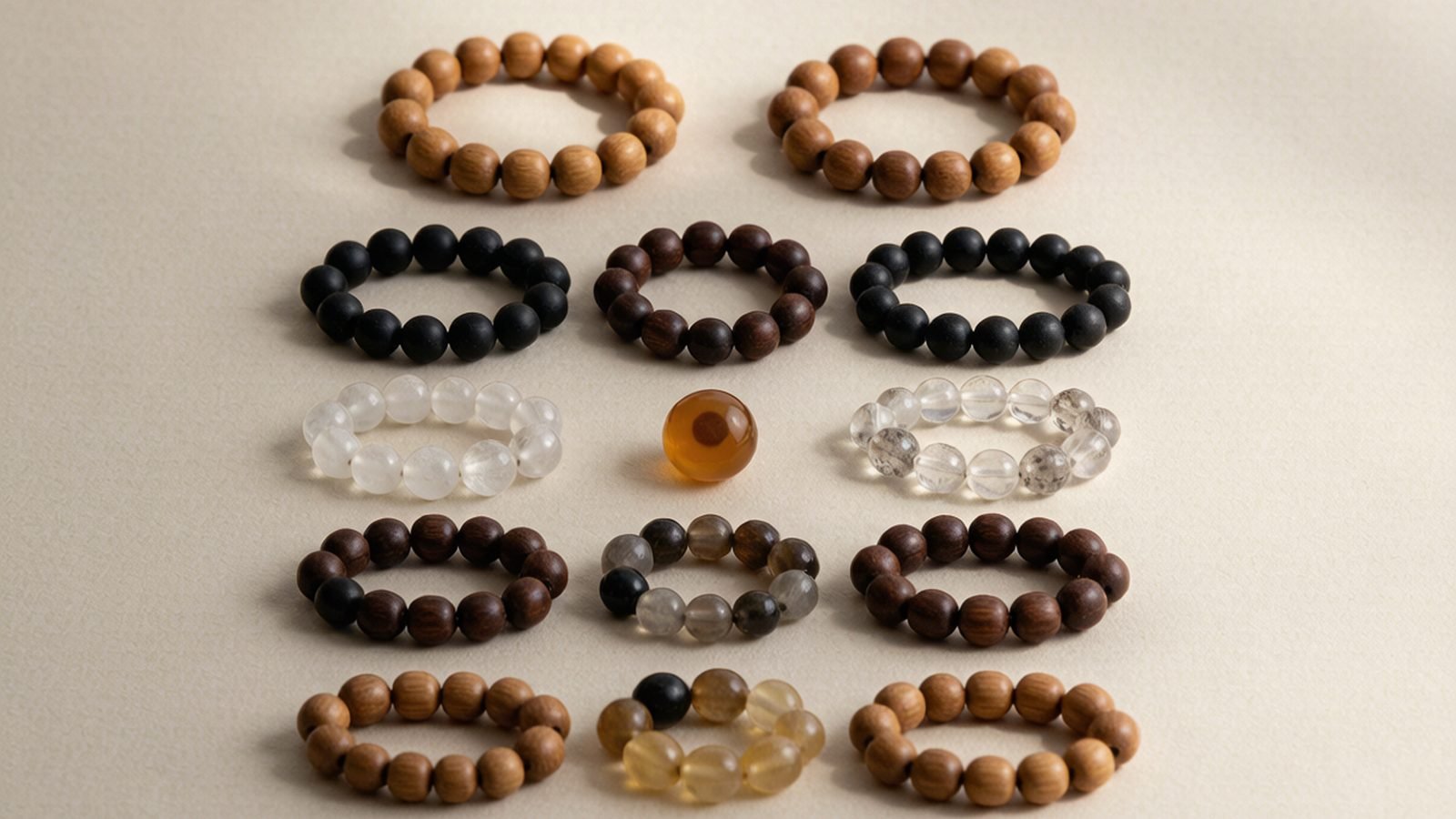
10 Wholesale Tasbih Styles to Diversify Your Bead Range
Stocking a single plain bead string is no longer enough for wholesale buyers serving today’s Muslim market. A well-rounded tasbih assortment lets a retailer serve gift shoppers, daily users, and premium buyers from one shelf. Below are ten proven styles that help you widen the range without overcomplicating your buying plan.
1. Resin Beads for the Entry Price Point
Resin tasbih are lightweight, color-stable, and inexpensive to ship in bulk. They are the natural starting SKU for new accounts and for brands testing a prayer-goods corner. Offer two or three colorways so the shelf never looks empty.
2. Sandalwood for Scent and Prestige
Sandalwood carries a soft, lasting fragrance that buyers associate with quality. It sits at the premium end and works well as a gift item, especially when packaged in a small pouch. Margin is stronger here than on resin.
3. Kukka Wood for Everyday Durability
Kukka (often called koka) wood is dense and smooth, aging nicely with handling. It appeals to daily users who want a bead that feels substantial without a high price. A reliable reorder line for established retailers.
4. Rosewood (Huali) for Visible Grain
Rosewood offers a richer grain pattern and a warm tone that photographs well online. It bridges the gap between budget wood and luxury stone, making it a strong mid-tier choice for curated shops.
5. Glass Beads That Catch the Light
Glass tasbih reflect light and read as decorative even when not in use. They suit gift buyers and display nicely in a glass jar near the counter. Fragility means you should pad the packing, but the sell-through is steady.
6. Crystal for the Gift Segment
Crystal styles lean into the “beautiful object” side of the category. They pair naturally with prayer supplies displays and make easy add-on purchases during festivals or store anniversaries.
7. Agate for Natural-Stone Variety
Agate beads show natural banding, so no two strings look exactly alike. Buyers like the sense of a unique item, and you can rotate color batches across seasons without changing the product code.
8. Black Stone for a Modern, Matte Look
Matte black stone tasbih fit the minimalist trend in younger Muslim households. They photograph cleanly on social media and complement both traditional and contemporary retail settings.
9. 33 vs 99 Bead Formats
Most buyers expect both. The 33-bead format is compact and portable; the 99-bead format is the traditional full count. Carry both in your core wood and stone lines so a shopper is never forced to substitute.
10. Mixed-Material Gift Sets
Bundling a wood tasbih with a small pouch or a stone piece with a display stand lifts average order value. Sets also reduce the “which one do I pick” friction for gift shoppers who are new to the category.
How to Plan the Mix
A practical wholesale starting point is roughly 40% wood (kukka, rosewood), 25% stone (agate, black stone), 20% resin, and 15% glass or crystal gift styles. Adjust toward stone and crystal as your account’s gift sales grow.
FAQ
What bead size sells best? Most wholesale demand sits between 6mm and 10mm. Smaller beads feel refined; larger beads are easier to handle for older users.
Should I stock both 33 and 99 beads? Yes. They serve different habits, and carrying both avoids lost sales at the shelf.
Which style has the best margin? Sandalwood and crystal typically carry the strongest per-unit margin for gift-focused retailers.
Summary
Diversifying your tasbih range across wood, stone, resin, glass, and crystal—and across 33 and 99 bead formats—lets one product family serve daily users and gift buyers alike. Start with a balanced wood-and-stone core, then layer in resin for volume and crystal for margin.