
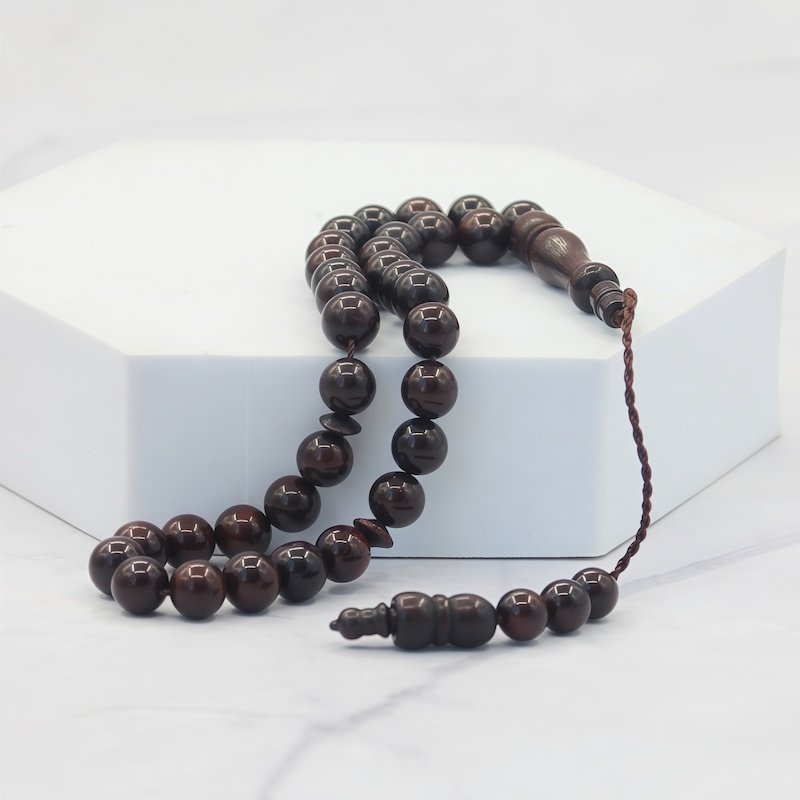
33 Beads vs 99 Beads: 5 Tasbih Sourcing Decisions Every Wholesaler Must Make
Sourcing Islamic prayer beads (tasbih) for wholesale looks simple from the outside: pick a material, choose a color, place an order. But bead count changes everything—shelf presence, price positioning, regional demand, and ultimately whether your inventory moves or stagnates. If you’re building a tasbih category for 2026, these are the five decisions that separate a profitable SKU set from a warehouse full of slow-movers.
1. Bead Count vs. Regional Preference
This is the foundational decision, and most wholesalers get it backwards. In Southeast Asia (Indonesia, Malaysia), 33-bead tasbih dominates daily use. In the Gulf and Turkey, 99-bead versions hold stronger cultural weight. If you’re supplying both regions, a 70/30 split (33 vs 99) is a safe starting point. If you’re focused on one region, let local retail data—not supplier catalogs—dictate your ratio.
The mistake: over-indexing on 99 beads because it feels “more complete.” It is. But completion and portability are different needs. Stock what your customer’s customers actually carry.
2. Material Choice: Wood, Stone, or Resin?
Material determines both unit cost and perceived value. Wholesale tasbih in olive wood or ebony commands premium pricing but requires careful moisture control in transit. Resin and acrylic options offer consistency and lower breakage rates, ideal for high-volume markets. Stone beads (agate, onyx) sit in the middle—premium positioning with manageable logistics.
One often-overlooked factor: bead finish. Matte finishes hide fingerprints and wear; high-gloss finishes show age faster. For wholesale buyers supplying gift markets, finish durability is a recurring quality complaint. Specify matte or semi-matte in your sourcing specs.
3. Stringing Method and Durability Expectations
A tasbih that breaks within three months of daily use is a reputation risk for your retail customers—and a return headache for you. There are three common stringing methods: single-strand nylon, double-strand reinforced, and metal-chain (common in Turkish designs). For 99-bead tasbih, double-strand is strongly recommended. For 33 beads, single-strand is acceptable if the material isn’t excessively heavy.
Ask your supplier for a tensile test report—or at minimum, a sample batch stress test. If they can’t provide one, that’s your answer about their quality control.
4. Packaging: Pouch, Box, or Bare?
In gift-heavy markets (Gulf, Pakistan), tasbih without a pouch or box struggles at retail. In daily-use markets (Indonesia, Malaysia), minimal or no packaging is acceptable and keeps unit cost down. The wholesaler’s job is matching packaging tier to market expectation, not defaulting to what looks nicest in the catalog.
A practical compromise: source with pouches included but unbranded. Your retailers can add their own branding, and you avoid committing to a single packaging design across your entire tasbih SKU set.
5. Certifying Origin and Material Authenticity
“Olive wood” that isn’t actually olive wood is a fast way to lose retail trust. For premium SKUs, request material origin documentation. For stone beads, a simple hardness test (Mohs scale reference) separates genuine agate from dyed resin. You don’t need to become a gemologist—but you do need to know which of your SKUs are most likely to face authentication questions from retailers.
The wholesalers who weather margin pressure best are the ones who can document what they’re selling. Origin certificates cost little up front and prevent expensive trust repairs later.
FAQ: Tasbih Sourcing Basics
Q: Should I stock both 33 and 99 beads for every material?
A: Not initially. Start with 33 beads across all materials, then add 99 beads only for your top 2-3 bestselling materials where retail data supports the longer format.
Q: What’s the minimum order quantity (MOQ) I should expect for custom tasbih?
A: For standard materials, MOQs of 300-500 per SKU are typical. For custom engraving or branded pouches, expect 1,000+ per design. Negotiate tiered pricing rather than accepting the first quote.
The Bottom Line for Wholesalers
Tasbih sourcing isn’t just about bead count or material—it’s about understanding the daily rituals of the people using them. The most successful wholesalers in this category visit retail shops, handle returned products, and talk to end users. They treat tasbih not as a commodity but as a category with distinct usage patterns across regions and occasions. If you’re also planning to source prayer supplies wholesale, the same principle applies: usage context drives sourcing decisions more than catalog aesthetics ever will.