
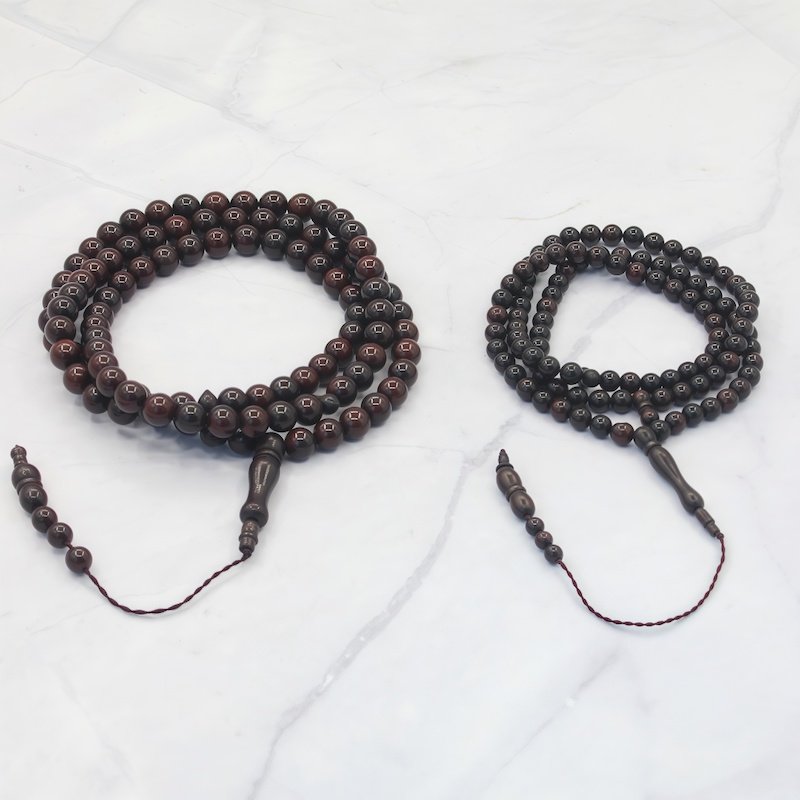
33 Beads or 99 Beads Tasbih: Which One Does Your Customer Actually Want?
You stare at the supplier’s catalog, two options side by side, same product family, different bead counts. One is compact, portable, familiar. The other is traditional, rhythmic, deeply rooted in practice. Which one do you stock? Which one actually moves off the shelf? The answer isn’t what most wholesalers assume, and getting it wrong can leave you holding slow-moving inventory while your competitors capture the demand you misread.
The Assumptions Wholesalers Make
Most buyers default to 99 beads because it sounds “more complete.” It’s the full count, the traditional choice, the one that feels like the “real” tasbih. So you load up on 99-bead inventory, allocate shelf space, and wait for the orders. But walk into any mosque, any prayer room, any Islamic goods shop from Istanbul to Jakarta, and you’ll notice something: the 33-bead tasbih is everywhere. Pocket-sized, repeated three times. It’s the practical choice, and practical wins in wholesale.
The disconnect is simple. Wholesalers source what they think customers should want. Retailers stock what their customers actually use. Bridging that gap starts with understanding why bead count matters in the first place.
Why 33 Beads Dominates Daily Use
The 33-bead tasbih is designed for repetition. You complete the cycle once, then again, then a third time—totaling 99. It fits in a jacket pocket, a handbag, a car console. For Muslims who use tasbih throughout the day—between prayers, during commutes, while waiting—portability isn’t a nice-to-have. It’s the reason they choose 33 beads. When you buy tasbih wholesale, the 33-bead format consistently outperforms in volume because it matches how people actually pray, not how they think they should pray.
There’s also a price sensitivity dynamic. A 33-bead tasbih uses roughly one-third the materials of a 99-bead version. For budget-conscious retailers serving large congregations or gift-giving during Ramadan, that price difference determines whether they can offer a meaningful product at an accessible price point. Your 33-bead SKUs are your volume drivers. Don’t treat them as an afterthought.
Where 99 Beads Still Owns the Shelf
That said, 99 beads isn’t disappearing. In markets where tasbih is as much a decorative or gift item as a prayer tool—think Gulf countries, wedding favors, Eid gifts—the full 99-bead version carries a premium perception. It looks substantial. It feels complete. Retailers in these markets will pay more per unit because their customers associate bead count with quality and intentionality.
The mistake isn’t stocking 99-bead tasbih. The mistake is stocking only 99-bead tasbih and assuming the market will follow. If you’re selling into Southeast Asia or North Africa, 33 beads is the everyday carry. If you’re selling into the Gulf or luxury gift markets, 99 beads holds stronger. Your sourcing strategy should reflect this geography, not your personal preference.
The Material Question No One Asks
Bead count and material are connected in ways most wholesalers overlook. A 99-bead tasbih in heavy stone or high-density resin becomes fatiguing to hold through a full cycle. A 33-bead version in the same material feels balanced. This is why 99-bead tasbih skew toward lighter materials—wood, light resin, glass—while 33-bead versions can carry heavier, more premium stones without becoming impractical.
When you’re planning your next order, don’t decide bead count in isolation. Decide bead count and material together. A mismatched combination—heavy 99-bead stone tasbih, for instance—will sit on the shelf regardless of how “authentic” it looks. Retailers know this. Your job is to know it before they do.
FAQ: Sourcing Tasbih for Diverse Markets
Q: Should I stock both 33 and 99 beads for every material?
A: Not necessarily. Start with 33 beads across all materials as your baseline. Add 99 beads only for your top 2-3 bestselling materials where the retail market supports the premium price.
Q: Does bead size matter differently for 33 vs 99?
A: Yes. For 99-bead tasbih, smaller beads (6-8mm) are essential or the length becomes impractical. For 33 beads, you have more flexibility on bead size, which opens up design options.
What This Means for Your Next Order
The wholesalers winning in tasbih right now aren’t guessing. They’re tracking which SKUs move, in which markets, at which price points. They’re noticing that 33 beads outsells 99 in Southeast Asia by 3:1, and adjusting their sourcing accordingly. They’re also noticing that “premium” doesn’t mean expensive materials—it means thoughtful design, consistent finish, and reliable supply. If you want to sell prayer mats wholesale alongside tasbih as a combined offering, the same rule applies: understand actual usage, not assumed preference.
The next time a supplier shows you their 99-bead catalog first, ask about their 33-bead options. Then ask which markets are buying which version. The answer will tell you more about your customers than any sales pitch will.