
Kufis, Thobes and Beyond: A Buyer’s Guide to Men’s Islamic Wear
Men’s Islamic clothing is one of the most stable categories in the wholesale Islamic goods market — but it is also one of the most misunderstood by buyers who approach it as if it were generic menswear with religious branding. The men’s Islamic wear segment has its own sizing conventions, fabric expectations, regional style variations, and purchase cycles. A buyer who ignores these nuances will stock products that sit on shelves. A buyer who understands them builds a category that generates dependable repeat orders.
The Core Categories in Men’s Islamic Wear
The men’s Islamic clothing market breaks into several distinct subcategories, each with its own supply chain dynamics. Kufis and prayer caps are the highest-volume, lowest-unit-price entry — a single mosque or Islamic school order can move hundreds of units at once, but margins per unit are thin. Thobes and jubbas represent the mid-to-premium tier: higher per-unit revenue, dependent on sizing accuracy and fabric quality. Men’s Islamic clothing collections typically also include waist wraps (izar), shalwar kameez sets for South Asian markets, and modest swimwear or sportswear for the growing active Muslim segment. Understanding which subcategories your target retailers actually need — rather than carrying everything — is the difference between a focused assortment and a scattered one.
Sizing and Regional Fit Differences
This is where many wholesale buyers stumble. A thobe sized for the Gulf market is cut differently from one sized for the North African or Southeast Asian market. Gulf-cut thobes tend to be fuller in the body with wider sleeves. North African djellabas are hooded and looser. South Asian shalwar kameez follows its own entirely different sizing logic. If you are sourcing from one region and selling into another, you must specify the cut at the order level — do not assume the factory knows your target market. The safest approach for new buyers is to carry Gulf-cut and a neutral international cut, covering the majority of demand without overcomplicating inventory.
Fabric Selection for Different Climates
Men’s Islamic clothing is worn year-round, often for hours at a stretch during prayer, community events, and daily activities. Lightweight cotton and cotton blends dominate the warm-climate category — anything above 180 GSM tends to feel heavy in Gulf or Southeast Asian conditions. For cooler climates and evening wear, polyester-viscose blends and lightweight wool blends enter the conversation. The key specification to track is not just the fabric name but the weave: a plain-weave cotton breathes differently from a twill, and that difference is immediately noticeable to someone wearing it through a Friday prayer service.
Kufis: Small Product, Big Volume
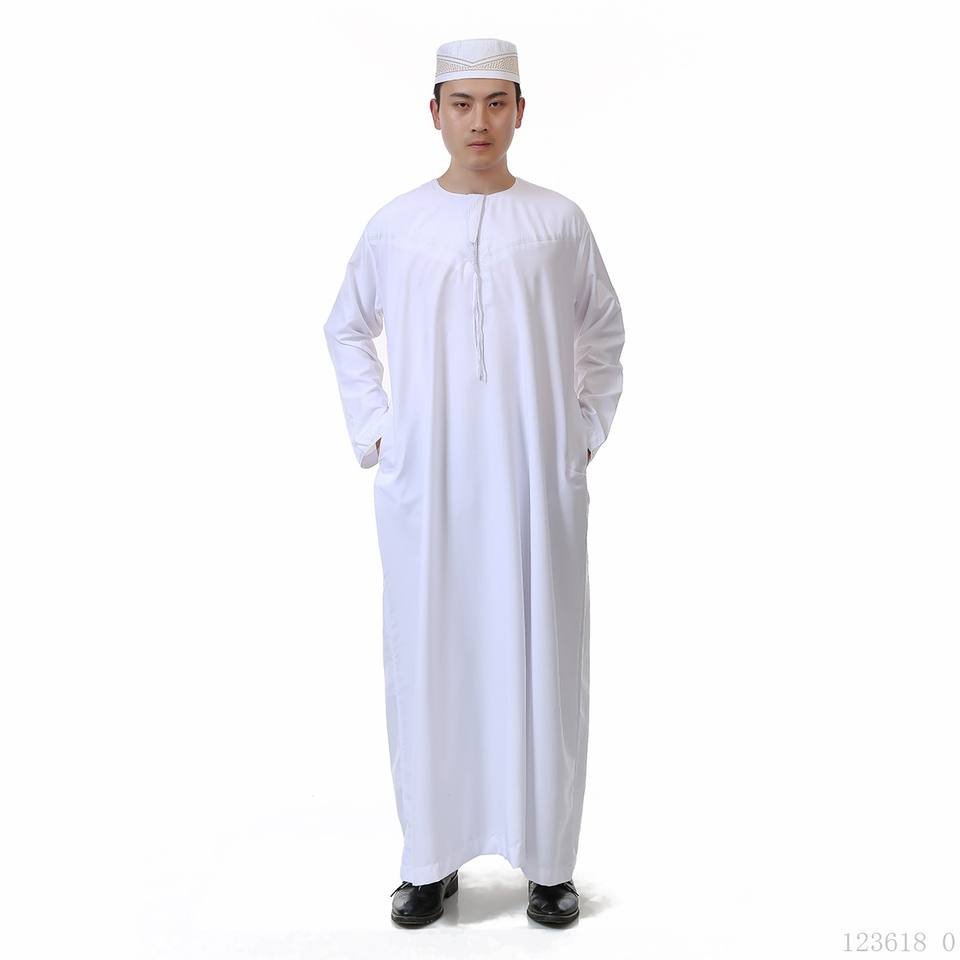
The kufi is a deceptively simple product that rewards attention to detail. The main variables are material (cotton, polyester, crochet, or blended), construction (machine-made versus hand-crocheted), and sizing flexibility. The most practical kufis for wholesale are one-size-fits-most designs with an elastic or ribbed back section that accommodates head circumference variance. Stocking both plain white and basic black in cotton covers perhaps 70% of demand; embroidered and patterned kufis serve the remaining segment at higher margins. Because the unit price is low and the bulk weight is minimal, kufis are one of the easiest categories to add to an existing Islamic goods assortment.
Thobes: The Margin Workhorse
Thobes generate the highest per-unit revenue in the men’s Islamic wear category, but they also carry the highest risk of fit-related returns and sizing disputes. Standard Gulf sizing runs from 54 to 62 (chest measurement in cm-based sizing systems) with length variations for each. Offering a core range of 56–60 in white, plus one or two darker color options, covers the bulk of the demand for most retailers. Embroidered collar details and cuff accents are the features that justify premium pricing — a plain white thobe and an embroidered one can sit at $12 and $28 wholesale respectively for identical base fabric, and the end consumer perceives the difference as substantial.
Seasonal Buying Patterns
Men’s Islamic wear has two clear seasonal peaks. The pre-Ramadan and pre-Eid period sees elevated demand across all categories, with thobes and formal kufis seeing the sharpest spike as men prepare new outfits for Eid prayers and family gatherings. The Hajj season creates a second, narrower spike focused on simple, lightweight ihram garments and practical travel kufis. Planning inventory around these two windows — ordering 90–120 days ahead for each — ensures you are stocked when retailers are buying, not when they have already placed their seasonal orders elsewhere.
FAQ
What are the standard sizes for wholesale thobes?
Gulf sizing typically ranges from 54 to 62, corresponding to chest measurements. Most wholesalers stock 56, 58, and 60 as core sizes. Length options — regular and tall — are essential for markets outside the Gulf.
Which kufi styles sell best in bulk?
Plain white cotton one-size kufis are the highest-volume SKU in most markets. Black follows closely. Crochet and embroidered styles sell at higher margins but lower volumes, typically to boutique and gift retailers.
What is the minimum order quantity for custom-branded thobes?
Custom-branded or custom-embroidered thobes typically require a minimum of 200–300 pieces per style per color. Standard white thobes without customization are available at much lower MOQs from most suppliers.
Conclusion
The men’s Islamic wear category rewards precision. Know your regional cuts, specify your fabrics by weave and weight, and build your assortment around the core sizes that account for 80% of demand. The wholesalers who succeed in this space are not necessarily the ones with the largest catalogs — they are the ones whose retailers can confidently reorder the same SKU six months later and receive exactly the same product. That consistency starts with the sourcing decisions you make now.