
Prayer Mats: A Wholesale Deep Dive into Materials, Sizes & Care
A prayer mat looks simple, but for a wholesaler sourcing prayer supplies, the material choice decides price tier, durability, shipping weight, and who buys it. This deep dive breaks down the six material families you’ll actually see in bulk orders — and what each one is good for.
The six materials wholesalers actually see
Most catalogs split into chenille, polyester, viscose (imitation silk), cotton, non-woven, and polypropylene (PP). They are not interchangeable. Each serves a different buyer and a different price point, and mixing them correctly is what keeps a range profitable.
Chenille — softness and a premium feel
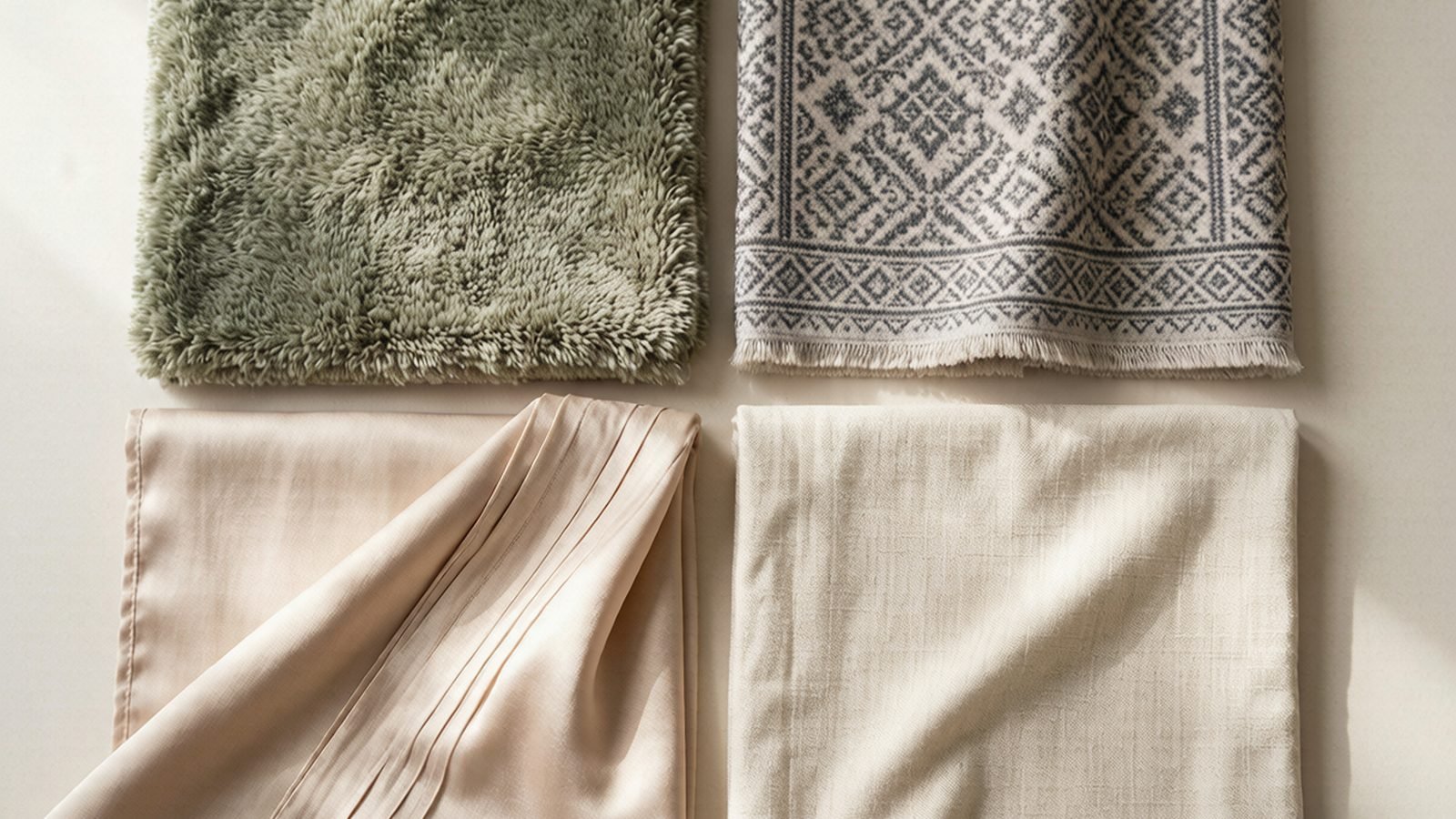
Chenille mats are plush, with a raisedpile that reads as higher-end. They photograph beautifully and suit gift and mosque-supply buyers. The trade-off is weight and price: they cost more to make and ship, so they belong in the mid-to-premium tier rather than the bulk-budget bin.
Polyester — the everyday workhorse
Polyester (often printed or with a soft flocked surface) is the volume hero. It’s light, inexpensive, colorfast, and easy to produce in large runs. For wholesalers moving containers, polyester is the baseline SKU that anchors every mixed shipment and satisfies price-sensitive retailers.
Viscose / imitation silk — the premium look
Viscose mats mimic silk with a smooth sheen and intricate woven patterns. They sit at the top of the range for gifting and special occasions. They’re less about daily wear and more about presentation, so stock them in smaller quantities and richer designs.
Cotton — natural and washable
Cotton and cotton-blend mats appeal to buyers who want a natural fiber and easy washing. They tend to be lighter and breathe better in warm climates. The washable cotton segment is growing as more households treat the mat like regular linen rather than a seasonal item.
Non-woven & polypropylene — budget and outdoor
Non-woven and PP mats are the lightweight, low-cost option — often used for travel, giveaways, and outdoor or mosque use where mats get heavy foot traffic. They won’t feel luxury, but they win on price and weight, making them ideal for high-volume promotional and institutional orders.
Size and weight logic for export
Standard personal mats run around 60×110 cm to 70×110 cm; larger family or mosque sizes go up from there. For container planning, weight per unit matters more than you’d think: a chenille mat can weigh two to three times a polyester one, directly hitting freight cost. Balance your mix so the heavy premium tiers don’t crowd out the light volume sellers.
Care and durability buyers ask about
Retailers increasingly field the same questions: is it machine washable, does the print fade, does the edge fray? Polyester and cotton answer “yes, washable” cleanly; chenille and viscose need gentler care. Wholesalers who brief their buyers with a one-line care note per material reduce returns and repeat the same accounts.
How to mix the range
A healthy wholesale range is roughly: 50% polyester volume, 20% chenille mid, 15% cotton washable, 10% viscose premium, 5% non-woven/PP budget. That gives every retailer — from discount to gift — something to attach, without overcommitting to slow premium stock.
FAQ
Q: Which material sells most in bulk?
A: Polyester, by a wide margin — it’s the light, cheap, colorfast baseline every mixed container needs.
Q: Is cotton worth stocking?
A: Yes, the washable cotton segment is growing as mats become everyday household items, not just seasonal.
Q: How do I control shipping cost?
A: Watch weight per unit; balance heavy chenille/viscose with light polyester and PP to keep freight sane.
Summary
Prayer-mat wholesale is a materials game. Lead with polyester volume, use chenille and viscose for premium and gifting, keep cotton for the washable trend, and reserve non-woven/PP for budget and institutional buys. Match the mix to weight and care expectations, and the range practically sells itself.