
Women’s Modest Fashion: A Wholesale Deep Dive into Hijabs, Undercaps & Everyday Essentials
For wholesalers serving Muslim women, modest fashion is the largest and most repeat-purchased category on the shelf. Within it, the hijab and headwear cluster drives the highest frequency of repurchase, but a complete range spans far more than scarves. This deep dive maps the layers, the fabrics, and the buying logic that keep the women’s wall turning all year.
The Core Headwear Stack
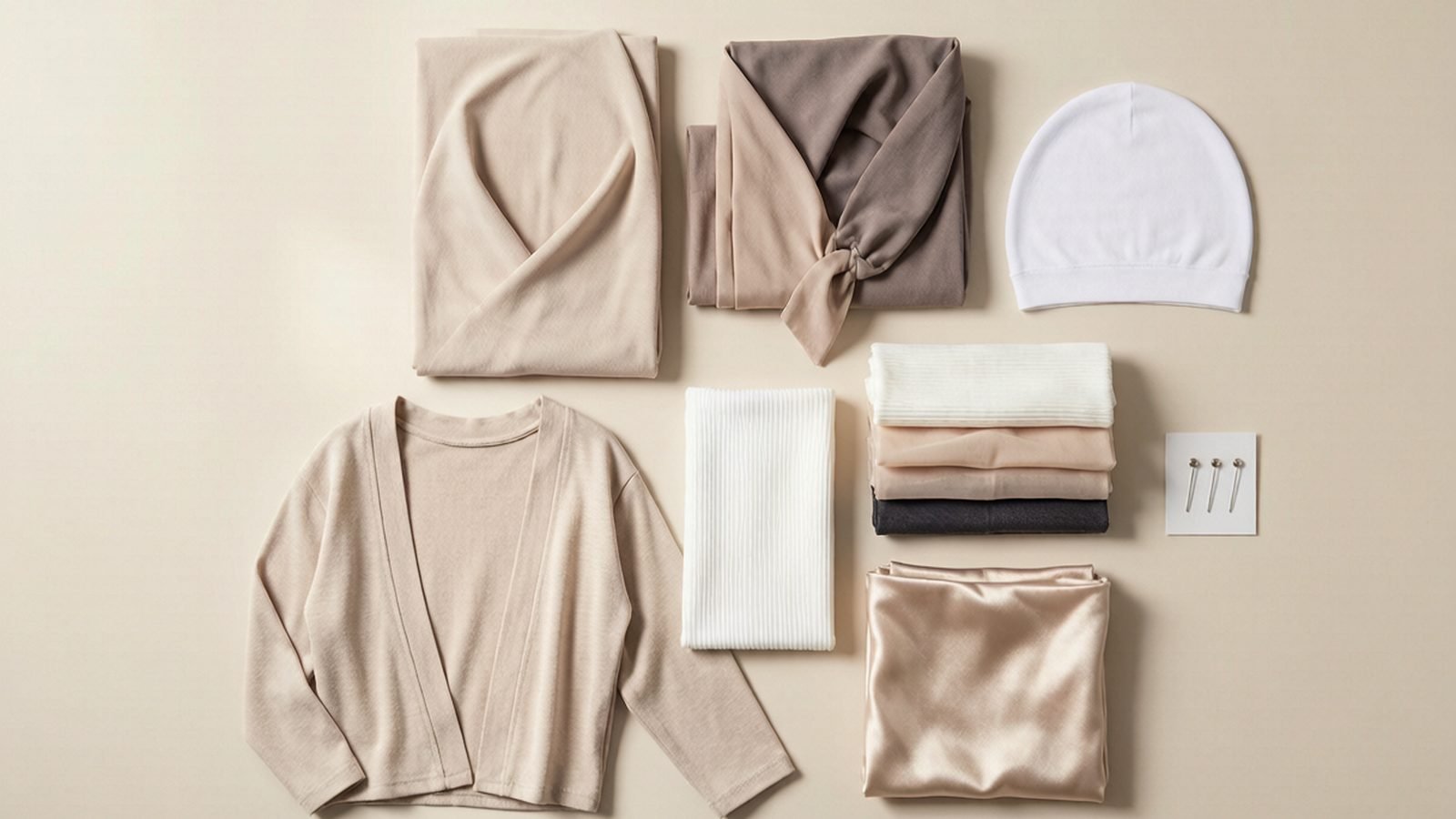
Every women’s assortment should open with five headwear roles. The undercap sits against the hair and anchors everything else. The everyday jersey hijab is the volume workhorse. The chiffon hijab covers occasion and gifting. The satin or viscose piece adds shine for events. The instant or turban style serves those who want coverage without pinning. Stocking all five means a shopper can build a full look without leaving the wall.
Fabric Choices and What They Mean for Buyers
Jersey is forgiving, breathable, and the easiest to sell in bulk. Chiffon drapes beautifully but needs an undercap and a little confidence, so it skews to gift and occasion buyers. Cotton and bamboo blends suit hot climates and daily wear. Satin and premium viscose ride the event tier. Matching fabric to climate and use case is the difference between fast turnover and quiet shelves.
Sizing, Colors, and Assortment Balance
Most hijabs are one-size with a generous cut, but length and opacity vary by fabric. Lead the color story with neutrals — black, beige, navy, grey — then add seasonal tones. Too many loud colors create dead stock; a tight, repeatable palette with a few accents sells faster. For undercaps, keep skin-tone and black basics always in stock.
Everyday Essentials Beyond Headwear
The wall should reach past scarves. Loose cardigans, long tunics, and prayer dresses extend the basket and lift average order value. Bonnets and sleep caps serve a different need but share the same buyer. A modest-fashion corner that pairs headwear with a few garment basics reads as a destination, not a single rack.
Pairing Headwear with the Prayer Corner
Women often buy a hijab on the same trip as a prayer mat or a small tasbih. Placing the headwear near the prayer corner turns two separate purchases into one basket. An undercap displayed next to travel prayer sets is a quiet, high-frequency add-on that almost sells itself.
Quality Checks Before You Reorder
Before deepening any line, check stitching at the edges, dye lot consistency, and whether the fabric slips or holds. A hijab that runs long enough to pin securely and an undercap that stays put through the day are what generate repeat business. Sample across sizes and colors; one weak batch can damage a trusted label.
Stocking Cadence for a Steady Category
Modest fashion is not seasonal in the way ornaments are. Base styles move every week, so keep a deeper baseline and reorder on a four-to-six-week cycle. Use occasion fabrics to ride Eid and wedding peaks, but never let the everyday stack run thin. That balance keeps cash flowing and regulars coming back.
Frequently Asked Questions
Q: How many SKUs make a viable modest-fashion wall?
A: Start with roughly ten to fourteen headwear SKUs across the five roles, then add a handful of garment basics once the core turns reliably.
Q: Which fabrics sell fastest?
A: Jersey leads on volume and climate flexibility; chiffon and satin follow for occasion and gift demand.
Q: How do I avoid dead stock in fashion?
A: Tight neutral palette, steady basics always in stock, and small tests of seasonal colors before committing depth.
A well-built women’s modest fashion range is less a trend than a routine. Anchor it with the five headwear roles, match fabric to climate, keep neutrals turning, and let occasion pieces ride the peaks. Do that, and the wall becomes one of the most dependable lines in the store.