
Build a Year-Round Modest Fashion Basics Wall for Wholesale
The wholesale modest fashion conversation has moved past the Ramadan-and-Eid rush. As we covered recently, everyday pieces now outsell occasion wear — but knowing that and building the right shelf are two different jobs. If you run a retail buying desk or a wholesale catalog, the practical next step is a “basics wall”: a fixed, always-stocked set of modest pieces your customers reach for week after week. Here is how to assemble one without overcommitting capital.
Why a Basics Wall, Not a Seasonal Shelf
A seasonal shelf lives for six weeks and then dies. A basics wall is permanent fixtures with predictable turnover. The difference shows up in three places: steadier cash flow, fewer dead periods between festivals, and simpler reordering because you are buying the same SKUs every month instead of guessing next season’s print. For a wholesaler, that consistency is what lets you plan container space and negotiate better terms.
Step 1 — Audit Your Current Modest Mix
Before you add anything, list what you already carry and tag each SKU as everyday, occasion, or dead stock. Most retailers discover they are running 70% occasion and 30% everyday — the inverse of where demand actually sits. That gap is your opportunity. You do not need to clear occasion stock; you need to rebalance new buys toward repeat-purchase basics.
Step 2 — Pick the Core Women’s Pieces
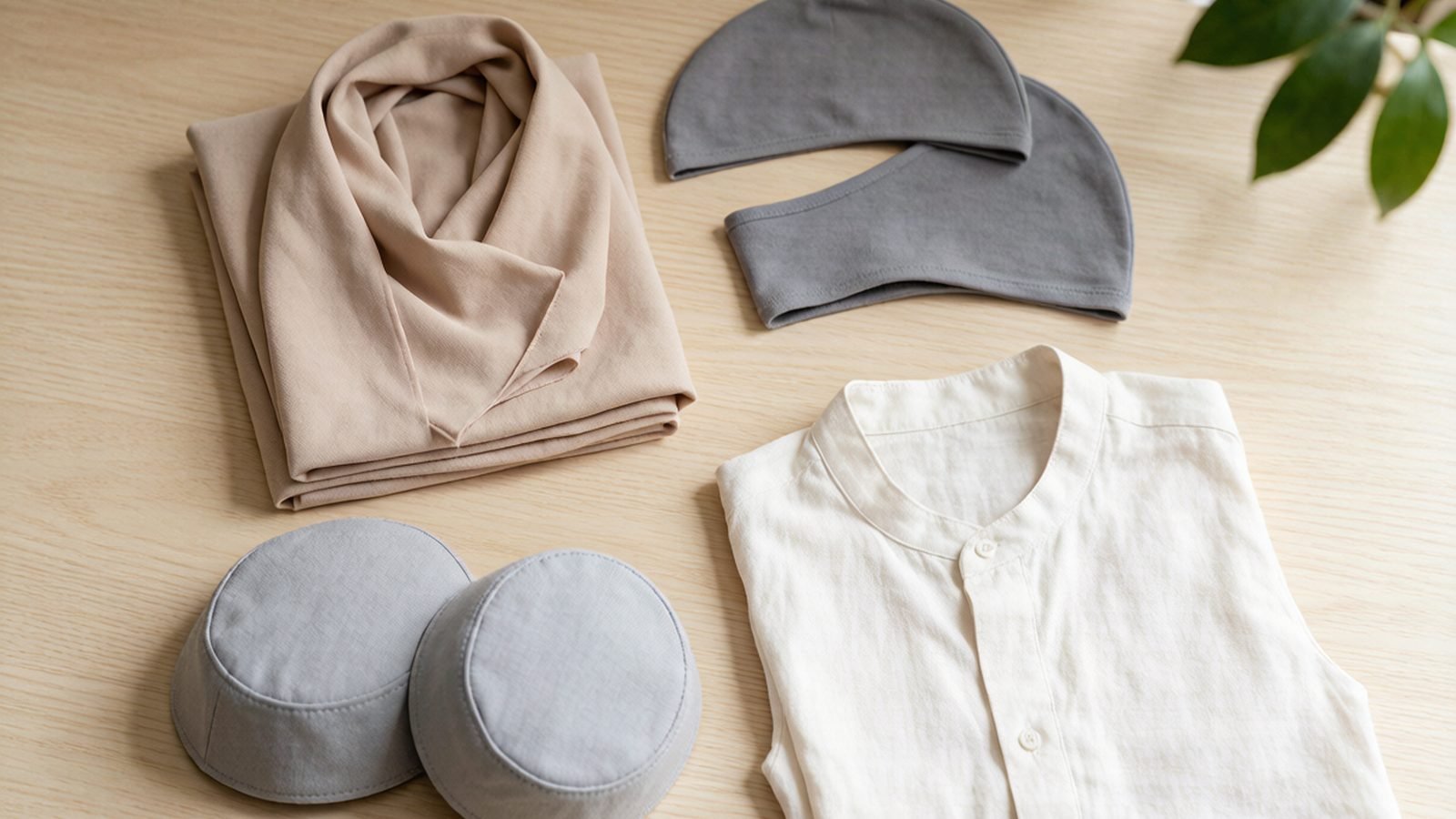
Start the wall with the items women replace most often. Seamless undercaps in nude and black, breathable everyday hijabs in neutral tones, and modest long-sleeve tops form the backbone. These are consumed continuously, so they generate the reorder rhythm that keeps your warehouse moving. Build the base from the women’s collection and let sell-through tell you which colors to deepen.
Step 3 — Add the Core Men’s Pieces
Mirror the wall on the men’s side with daily-wear thobes in durable cotton blends, plain kufi caps, and lightweight travel-ready basics. None of these are festival-only; they sell across the calendar. Pair the women’s base with the men’s collection so a household can shop both sides in one visit — and your basket size climbs accordingly.
Step 4 — Plan Facings and Reorder Cadence
Allocate facing space by turnover, not by how the product photographs. Give undercaps and everyday hijabs the most shelf and the tightest reorder window — two to three weeks. Thobes and tops can run a four-to-six-week cadence. Lock a monthly reorder date so the wall never goes thin, and you avoid the emergency air-freight orders that eat margin.
Step 5 — Merchandise for Repeat Visits
Group the wall by use, not by brand: “everyday headwear,” “daily tops,” “regular thobes.” When a customer can find her usual undercap in three seconds, she comes back weekly. Rotate one neutral color in and one out each season to keep the wall feeling current without scary markdown risk.
Frequently Asked Questions
Should I drop occasion wear entirely?
No. Keep a curated Eid and Ramadan selection for the seasonal surge, but let the basics wall carry your baseline. Occasion pieces become the topping, not the foundation.
How many SKUs make a good starter wall?
Start lean — 15 to 25 everyday SKUs across both genders. Prove the turnover, then expand. A thin, fast wall beats a deep, slow one.
What if a basics style stops selling?
Because batches are small and the cadence is monthly, you can drop a slow SKU on the next reorder with almost no stranded stock. That is the whole point of the model.
Summary
A year-round modest fashion basics wall turns the old “peak-and-wait” wholesale habit into a steady, reorderable business. Audit your mix, anchor the wall with undercaps, everyday hijabs, modest tops, daily thobes, and caps, and merchandise by use so customers return weekly. Build the base from the women’s and men’s collections, set a monthly reorder date, and let repeat purchases — not the festival calendar — drive your growth.