
Ramadan Is Coming — Stock Your Shelves Before the Rush Hits
Every year the pattern repeats. The month of Ramadan arrives, demand for prayer and modest-wear goods spikes within days, and the shops that waited too long are left explaining to regulars why the good prayer supplies are already gone. If you run a Muslim lifestyle store, the smartest move is to treat stocking as a calendar event, not a reaction. Pair that planning with a well-edited women’s collection and you walk into the season ready instead of scrambling.
Why early stocking beats the last-minute panic
Manufacturers and freight both tighten before Ramadan. Factories in the producing regions slow for their own holiday observances, and container space gets booked weeks ahead. Order in the calm before the storm and you pay normal lead times. Order two weeks into the month and you either pay air-freight premiums or miss the window entirely. The buyers who plan early are the ones still smiling in week three.
Start with the prayer essentials
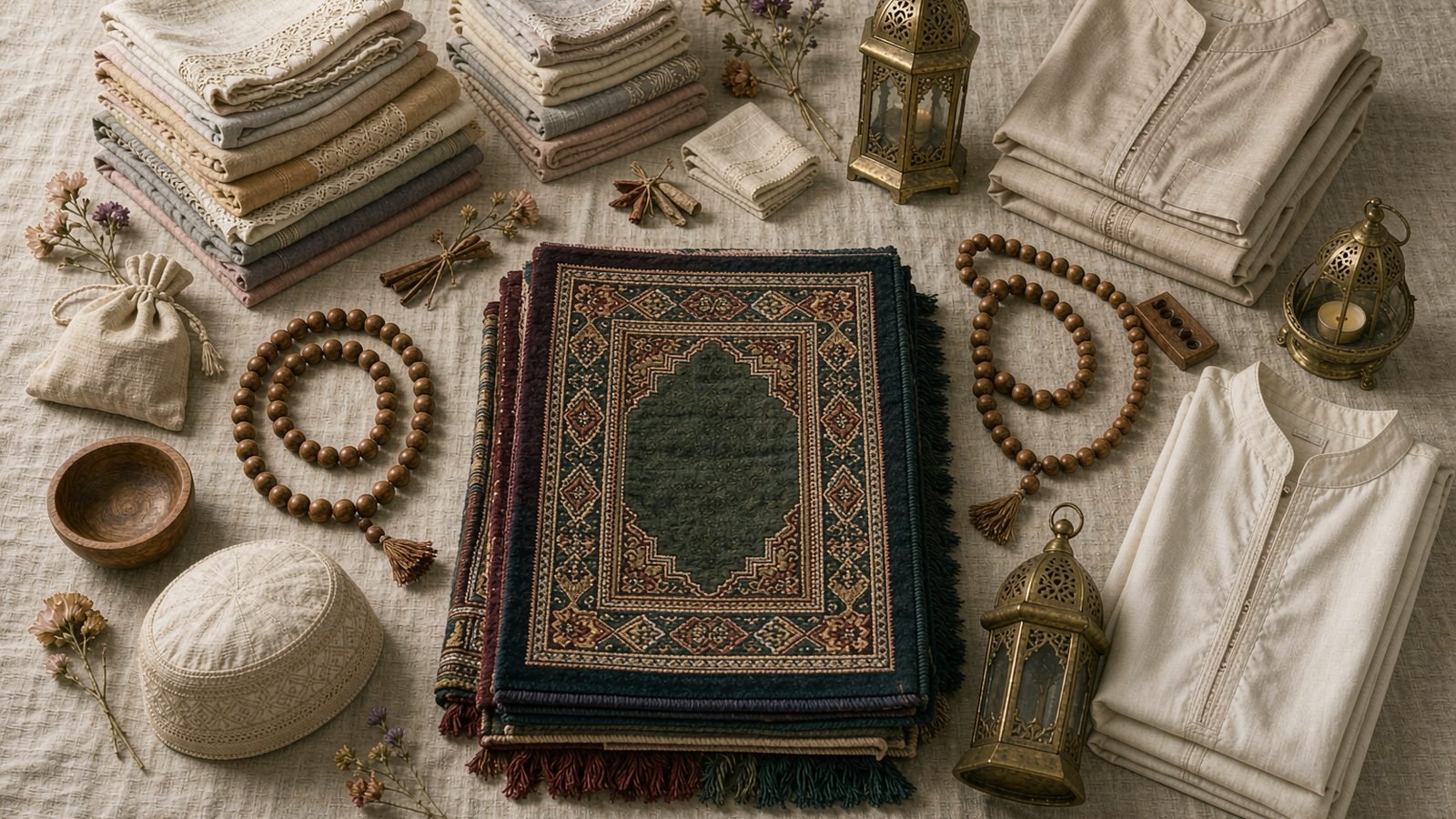
Prayer mats and tasbih are the spine of the season. Mats in chenille, polyester, and travel-fold styles move first, especially the lighter 6×10 options families take to the mosque. For tasbih, keep wooden 33-bead and 99-bead counts in rosewood and sandalwood front — they read as gift-grade and sell to both daily users and gift buyers. Stock deeper here than anywhere else; these are the items people buy two and three at a time.
Don’t leave the women’s corner thin
Hijabs, undercaps, and prayer sets are the quiet winners of the month. Women refreshing their wardrobes before Eid buy the scarf first and the undercap with it. Keep breathable undercaps next to the scarves, not in a separate aisle, and add a folded prayer set (scarf plus mat) as an easy add-on. Muted tones — dusty rose, sage, warm beige — echo the decor and move faster than loud colors.
Men’s wear moves faster than you think
Thobes, kufi caps, ihram towels, and khuff socks all peak around travel to the mosque and pre-Eid gatherings. The ihram and keffiyeh sell to travelers specifically; the thobe and kufi to everyone dressing up for tarawih and Eid prayers. A small, well-chosen men’s rail beside the mats catches the husband who came in for one thing and leaves with three.
Decor sets the mood, and the basket
Lanterns, wall art, and small ornamental pieces turn a store into a Ramadan destination. They are the items shoppers didn’t know they needed until they saw them lit on your shelf. A single warm-lit corner with brass lanterns and framed prints lifts the whole floor’s energy and pulls in gift buyers who might otherwise have skipped you.
Build ready-to-gift sets before the rush
The biggest lever is pre-bundling. A travel mat, an undercap, and a wooden tasbih in one box. A thobe, a kufi, and a small decor piece for the home. Label them clearly and you remove choice paralysis at the exact moment demand is highest. Sets also protect your margin because you’re not discounting single items to move them.
FAQ
How early should I place the order?
Ideally six to eight weeks before the expected start of Ramadan. That buffer covers factory slowdown and shipping variance without forcing air freight.
Which items sell out first?
Prayer mats, wooden tasbih, undercaps, and lanterns, in that order. Keep the deepest stock on those four and thinner on the slow movers.
Can I mix a starter bundle across categories?
Yes, and you should. A mat-plus-scarf or thobe-plus-decor set consistently outsells the same items sold separately, because it hands the buyer a finished thought.
Summary
Ramadan rewards the prepared. Front-load your orders, weight your stock toward mats, tasbih, undercaps, and lanterns, keep the women’s and men’s pieces adjacent to the prayer goods, and pre-build a few gift sets. Do that and the month becomes your strongest selling window instead of your most stressful one.