
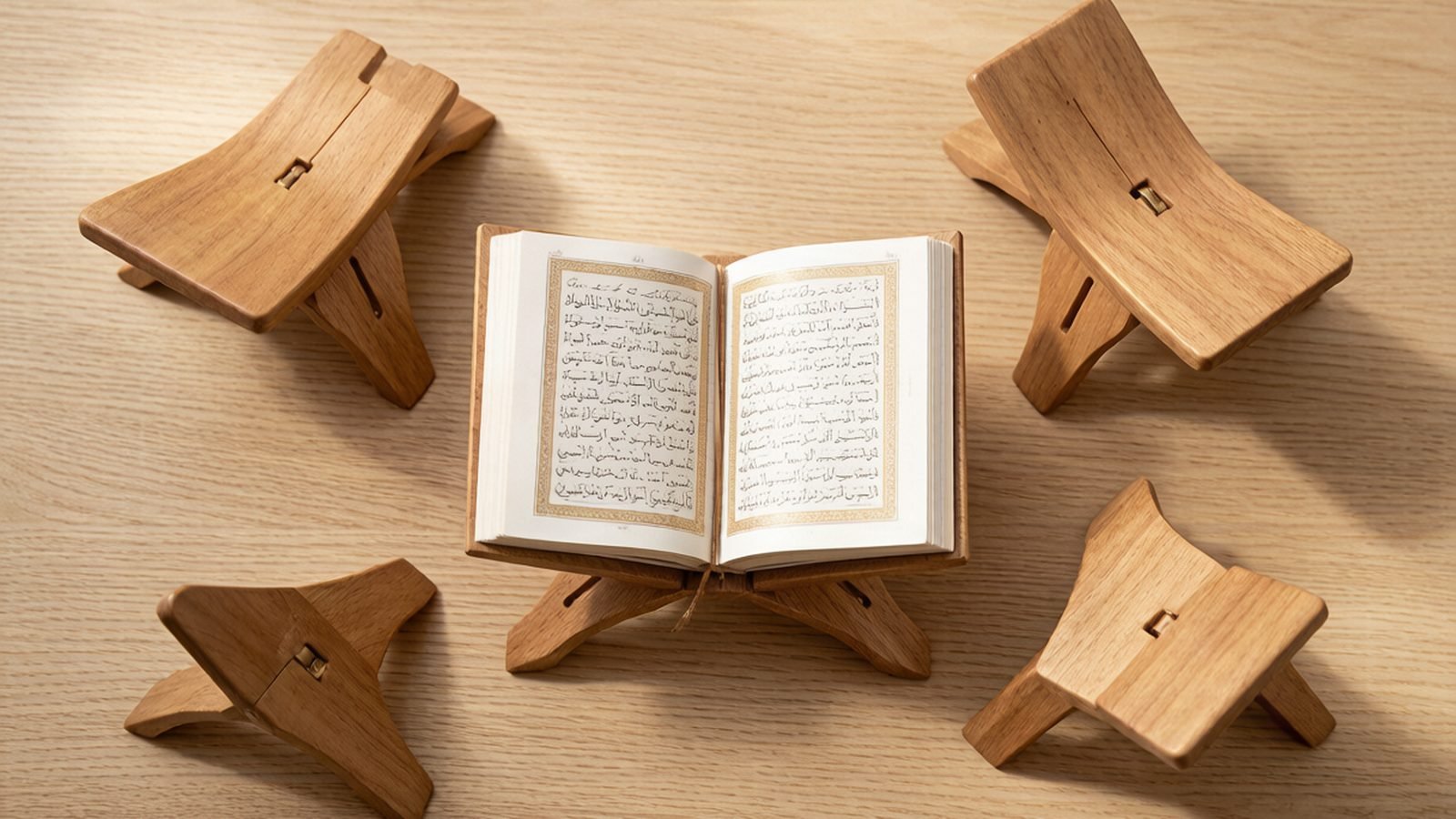
How to Source Wholesale Quran Stands (Rehal)
A wooden Quran rehal—the angled book stand used to hold the Quran while reading—is one of the most practical, giftable, and low-risk items you can add to an Islamic wholesale catalog. Unlike seasonal apparel, a rehal sells steadily all year, ships flat, and appeals to both first-time Muslim buyers and established households. If you are building or expanding a wholesale assortment, this guide walks through exactly how to source Quran stands in six clear steps, from sampling to a reliable reorder routine.
1. Decide Between Folding and Fixed Styles
Most retail buyers want the foldable rehal because it stores in a drawer and travels easily to the mosque or on trips. Fixed (non-folding) stands are sturdier and better suited to display or communal use. Source both shapes, but weight your first order toward folding models—they turn over faster at retail and cost less to ship. Confirm the hinge feels solid on folding units before you buy in volume.
2. Choose Material and Finish
Rehals are typically made from sheesham (Indian rosewood), mango wood, or laminated pine. Sheesham feels premium and develops a rich patina over time; pine keeps the entry-level price point low. For the Islamic crafts and decor range, a carved, inlay, or laser-engraved finish commands a visibly higher margin. Always request a physical finish sample—product photos rarely show true grain, stain tone, or the sharpness of engraving.
3. Set a Realistic MOQ and Sample First
Before committing to a full container, order two or three units of each shortlisted style directly from the supplier. Check hinge strength on folding models, edge sanding, and whether the Quran actually rests at a comfortable reading angle. A small sample spend now prevents an expensive defective batch later, and it gives you real photos for your own listings.
4. Verify Packaging for Flat Shipping
The biggest wholesale risk with rehals is breakage in transit, especially on folding arms and carved edges. Confirm the supplier packs each unit in a form-fitting inner box and secures moving parts. Protective packaging directly protects your margin on prayer supplies accessories that customers expect to arrive pristine. Ask for the packed carton dimensions so you can plan pallets accurately.
5. Match the Size to Your Market
Standard rehals fit a 13–17 cm Quran; larger versions suit desk or mosque display. If your customers are mostly households, stock the medium size as your hero SKU. If you serve gift shops or airport boutiques, add a few ornate small stands. Matching size to market reduces dead stock and makes reorders predictable.
6. Build a Small, Reorderable Assortment
You do not need twenty variants to look complete. Three folding sizes plus one fixed display stand is a manageable, professional line. Keep one hero SKU in constant reorder so your listing never goes out of stock, and let sales data tell you which finish deserves the next expansion.
Frequently Asked Questions
Are Quran stands only used for reading the Quran?
Primarily yes, but many buyers also use them as elegant display pieces, which is why they sit naturally in both the prayer and decor categories.
What is a safe first order quantity?
A mixed 50–100 units across your three core sizes is a common, low-risk starting point for a new wholesale line.
How do I avoid customs or compliance issues?
Work with a supplier who labels wood items correctly, treats the material where required, and provides the documentation your destination market expects.
Summary
Sourcing wholesale Quran stands does not have to be complicated. Choose folding as your core style, sample before you scale, insist on protective packaging, and keep the assortment tight. With those six steps, a rehal line becomes a steady, high-margin addition to your Islamic goods catalog—and a product your customers will reorder for years.