
Men’s Islamic Apparel: A Deep Dive into Fabric & Build
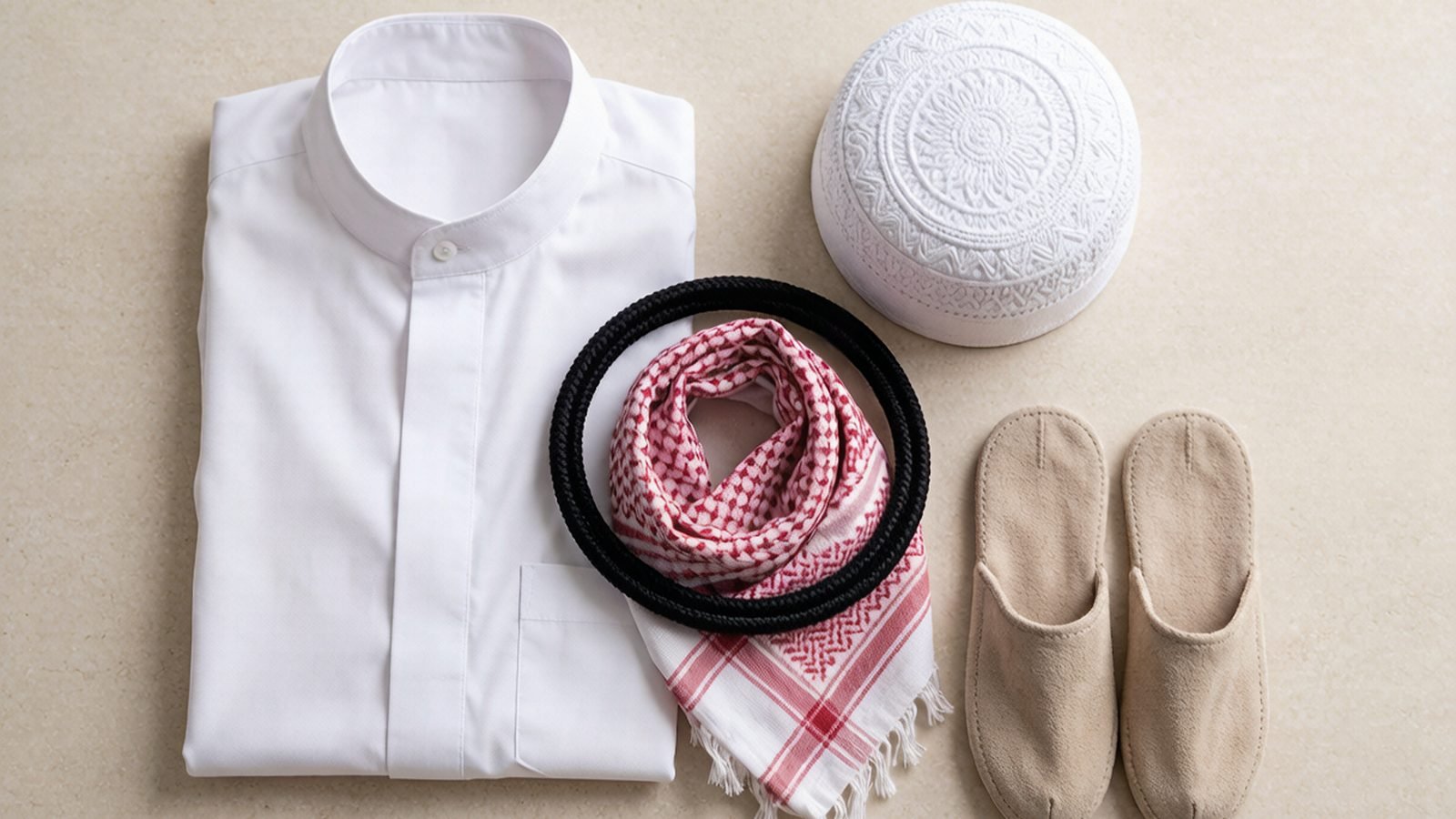
Men’s Islamic clothing—the thobe, the kufi cap, the ihram set, the keffiyeh and igal, and khuff socks—looks simple on a shelf but is quietly complex underneath. For a wholesale buyer, the difference between a product that reorders and one that gets returned almost always comes down to fabric and construction. This deep dive explains what actually matters when you source men’s Islamic apparel, and why small build details protect your margin.
Why Fabric Choice Drives Everything
The same garment in two fabrics behaves like two different products. A thobe in 100% cotton breathes and drapes well but wrinkles and shrinks if untreated. A polyester-cotton blend resists creasing and holds color through dozens of washes. For prayer wear that customers wear weekly, blend stability usually wins at retail, while pure cotton earns a premium for comfort. Knowing which your market wants prevents the classic mistake of over-ordering the wrong hand-feel.
Reading a Thobe: Weave, Weight, and Stitch
Thobe quality lives in three places. The weave should be tight and even with no stray floats. The fabric weight—measured in GSM—signals season: lighter weights suit tropical climates, heavier ones suit winter. Most telling is the stitch: single-needle seams lie flatter and last longer than overlocked edges, and reinforced underarms survive repeated prostration. A buyer who checks these three points can grade a thobe in under a minute.
Kufi Caps and the Comfort Factor
A kufi is small, so defects hide in plain sight. The key variables are elasticity recovery (does it spring back after stretching?), sweat-band construction, and whether the embroidery is locked on both sides. Cheap caps lose shape after a few washes; a well-built cap keeps its dome and becomes a repeat purchase. For high-turnover prayer caps, construction outweighs ornament.
Ihram, Keffiyeh, and Igal: Travel-Grade Durability
Ihram sets and keffiyeh scarves are travel and pilgrimage goods, so they must survive being folded, stuffed, and washed in hotels. Look for colorfast dye, rolled hems that will not fray, and—for the igal—a rope that holds tension without snapping. Pilgrimage-season demand is sharp and short; a defective batch during peak Hajj or Umrah is a lost year, not just a lost sale.
Khuff Socks: The Seal and the Stretch
Khuff socks are judged on two things: whether the elastic welt stays snug around the ankle through a long day of prayer, and whether the toe seam is smooth enough to wear against bare skin. Thin, poorly bonded socks slip and bunch; a properly bonded pair becomes a quiet staple that reorders through every season.
How Build Quality Protects Your Wholesale Margin
Returns and bad reviews do more damage than a slightly higher unit cost. When you specify fabric weight, stitch type, and tested wash performance up front, you shift the risk back to the factory and keep your listing’s rating intact. That rating, not the first-order price, is what compounds into repeat revenue.
Frequently Asked Questions
Which fabric is best for a first men’s apparel order?
A breathable cotton-poly blend thobe with reinforced seams is the safest, broadest-appeal starting point across most markets.
How can I check quality without a lab?
Stretch the fabric, inspect seam alignment under light, wash one sample, and confirm it keeps shape and color before scaling.
Should I stock pure cotton or blends?
Blends for everyday prayer wear and high-turnover caps; reserve pure cotton for a premium comfort line if your customers ask for it.
Summary
Men’s Islamic apparel rewards buyers who look past the surface. Fabric composition, GSM weight, seam construction, and wash-tested durability are the real levers of reorder success. Source against those specifics, and your men’s collection becomes less a gamble and more a dependable, margin-protecting line.