
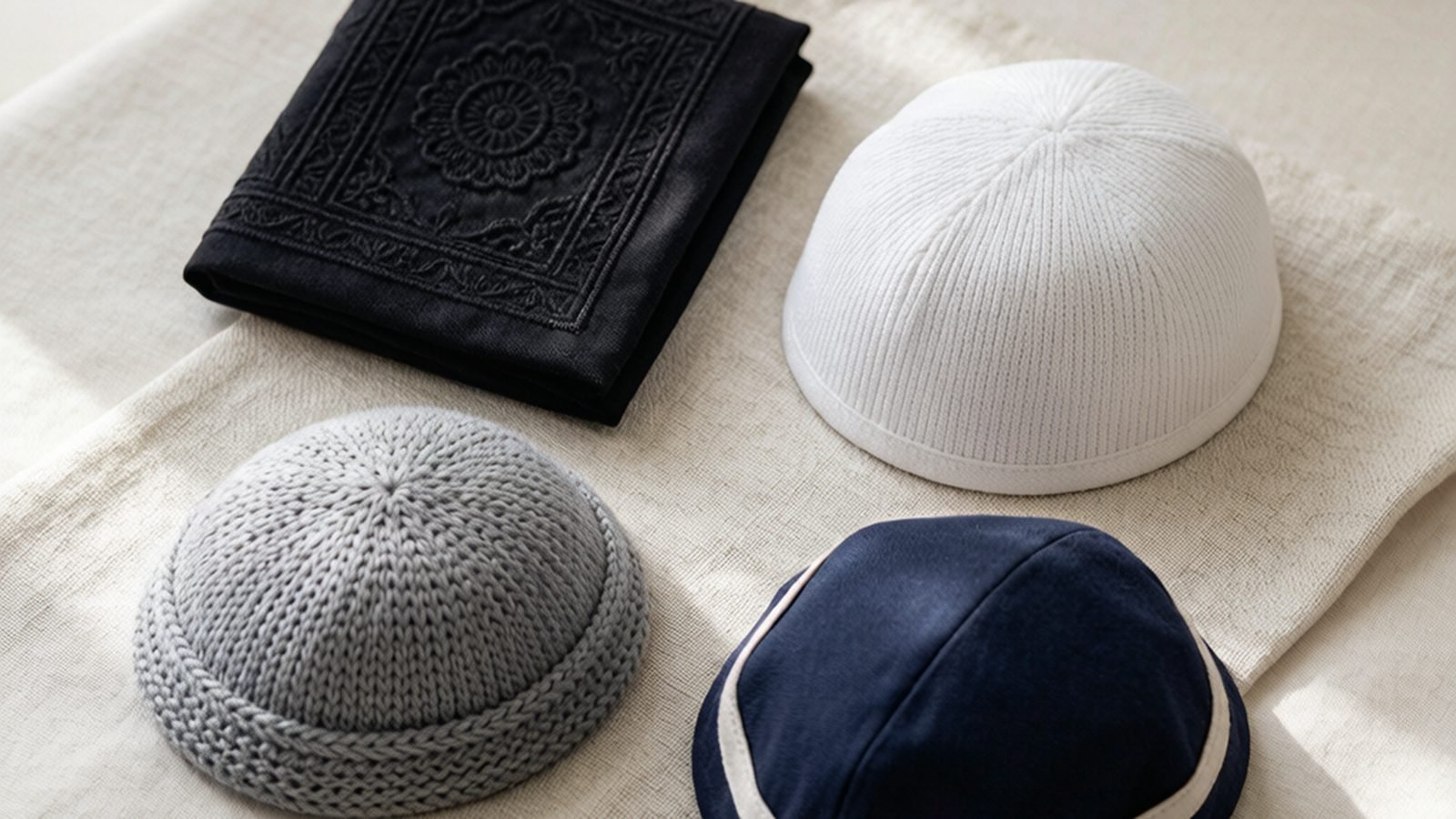
“I keep hearing prayer caps are an easy add-on, but I have no idea where to start. Which one do I even stock?” That’s the question most new buyers ask us first — and it’s the right one. A prayer cap (often called a kufi or taqiyah) is the small rounded cap Muslim men wear for daily prayers and at the mosque. It looks simple, but the wholesale decision is not. Let’s walk through it the way we would on a call.
So, What Exactly Counts as a Prayer Cap?
Good question. The term covers a few shapes: the plain ribbed skull cap, the taller embroidered kufi, and the bordered taqiyah. They all serve the same purpose, but they read very differently on a shelf. Plain caps move as everyday essentials; embroidered ones sell as gifts and Eid presents. Knowing the difference is step one before you quote a container.
Plain Kufi or Embroidered — Which Sells Faster?
For steady reorder, plain is king. A man loses or wears out a simple cap and buys the same one again — that’s repeat business you can count on. Embroidered styles spike around Eid and Ramadan but sit quiet the rest of the year. Most shops do well with a 70/30 split: seventy percent plain, thirty percent decorative. That balance keeps cash flowing without dead stock.
Does Material Really Matter for Wholesale?
Yes, more than buyers expect. Cotton and polyester blends breathe better in hot climates and survive frequent washing — exactly what daily wearers need. Heavier embroidered caps in velvet or thick cotton feel premium but cost more and move slower. If your market is Southeast Asia or the Gulf, lean light. If it’s a gift shop in a cooler city, the heavier pieces can carry higher margins. Match the fabric to the weather, not just the photo.
What About Sizing and Fit Across Markets?
Here’s a detail that saves returns. Most prayer caps are “one size fits most” with a little stretch, but the crown height varies. Some communities prefer a snug low cap; others like a taller kufi that stays put during sujood. When you source, ask for both profiles and sample them. A cap that slips off mid-prayer is a one-star review waiting to happen, no matter how nice it looks.
How Many Should I Order for a First Container?
Don’t overthink it. Prayer caps are light and cheap to ship, so a first order of 500–1,000 mixed units is a safe test — say four plain colors and two embroidered designs. That gives you real sell-through data without tying up capital. Reorder the winners, drop the slow movers, and let the numbers tell you the mix. Caps are forgiving that way; they’re not a heavy, expensive category like furniture.
Frequently Asked Questions
Are prayer caps only for men?
In most markets yes — the cap we’re discussing is the men’s prayer cap. Women’s modest headwear is a separate line entirely, so don’t mix the two when planning your buy.
Can I private-label them?
Often, yes. Many suppliers will add a small woven tag or custom color at a modest minimum. If branding matters for your shop, ask early — it changes the lead time more than the price.
What’s the typical MOQ?
For mixed plain styles, minimums are usually low (often 50–100 per color). Embroidered designs may need a higher run because of setup. Confirm both before you commit a container.
Conclusion
Stocking prayer caps isn’t complicated once you treat it like a conversation, not a gamble. Start plain, keep embroidery as the seasonal lift, match fabric to climate, and test with a modest first order. Do that, and the cap that looked like an afterthought becomes one of the steadiest repeat sellers in your Men’s Collection.