
Ramadan decor wholesale moves on a clock that most buyers never see. By the time crescent moons and lantern designs start trending on social media, factories in China have already closed their production slots for the season. Wholesalers who understand this gap capture the peak. Those who don’t end up scrambling for leftovers.
The Ramadan Decor Timeline Nobody Talks About
Here is what catches buyers off guard every year. Retail demand for Ramadan decorations begins surfacing in late February or early March, depending on when Ramadan falls. But wholesale orders need to land at factories by November or December of the previous year. That is a three to four month gap between when buyers think about ordering and when they actually should.
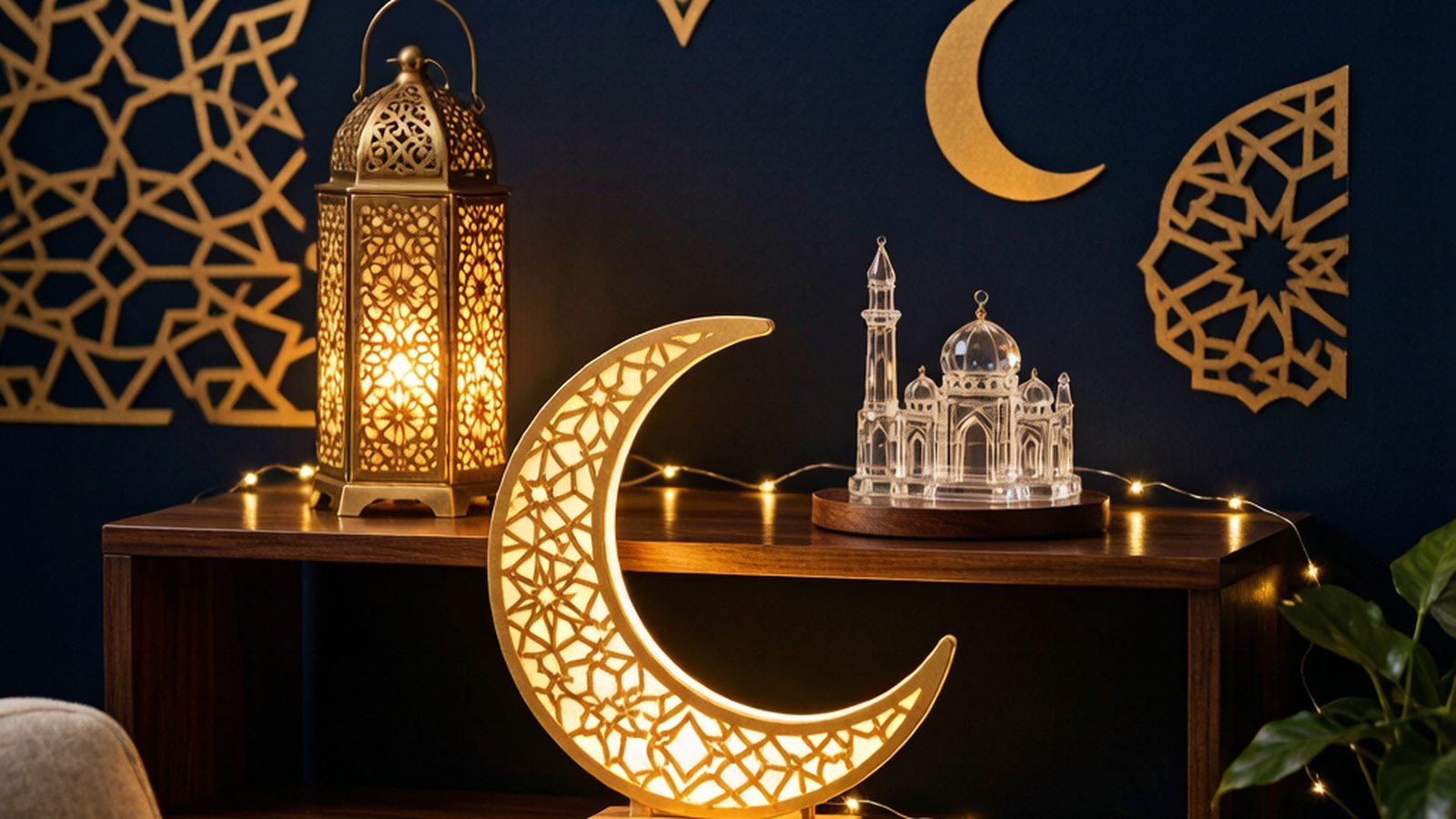
Factories producing decorative ornaments for Ramadan run limited capacity. Crystal mosque figurines, LED crescent lights, and geometric wall panels each require separate production lines. Once those lines switch to other product categories, reopening them mid-season is not an option. The window closes quietly, and there is no announcement.
Why Late Orders Cost More Than Just Money
Ordering late does not just mean paying rush fees. It means settling for whatever inventory remains. The most popular items — warm-toned LED lanterns, crystal calligraphy pieces, and foldable Ramadan wall decals — sell through first. What stays in stock are usually the less desirable designs or sizes that underperform at retail.
There is also a freight dimension. Air shipping rates spike sharply in the six weeks before Ramadan as everyone who ordered late tries to expedite. A buyer who planned ahead pays standard ocean freight. A buyer who waited pays three to five times that for air, assuming space is even available.
The Three-Phase Wholesale Window
Experienced wholesalers break Ramadan decor sourcing into three phases. Phase one runs from September to October. This is when buyers review last season’s sales data, identify trending designs, and place initial orders. Factory slots are open, prices are stable, and customization requests are welcome.
Phase two spans November to December. Orders are still possible, but production queues are filling. Buyers who enter at this stage face tighter lead times and limited customization. Phase three is January to February. This is the danger zone. Most factories are already at capacity, and the only options are stock designs from remaining inventory or expensive air freight on small quantities.
Which Decor Categories Sell Out First
Not all Ramadan decor categories move at the same speed. Based on reorder patterns from wholesale buyers, three categories consistently sell out first. LED night lights shaped like mosques and crescents top the list because they combine decor with function. Crystal and glass ornaments with Islamic motifs follow closely, driven by gifting demand. Ramadan-themed wall decorations — including geometric patterns and calligraphy panels — round out the top three.
Categories that move slower include large floor lanterns and oversized statement pieces. These have narrower retail appeal and higher price points, so inventory tends to last longer. Buyers who prioritize the fast-moving categories early can build a more profitable assortment.
How Smart Buyers Lock In Inventory Early
The wholesalers who consistently win Ramadan season share a few habits. They start reviewing product catalogs in August, well before most competitors. They place deposits on production slots by October, securing capacity without committing to final quantities. And they split orders into two shipments — an early batch for display and pre-orders, and a second batch for restocking after initial sales data comes in.
Another tactic is mixing evergreen decor with seasonal items. A crystal ornament that sells year-round but spikes during Ramadan is a safer bet than a purely seasonal piece. Buyers who balance their assortment this way reduce the risk of post-season inventory that sits unsold.
Frequently Asked Questions
When should I place Ramadan decor wholesale orders?
Ideally between September and November for full customization. December is still workable but with limited options. January and February are rush territory.
What is the typical lead time from Chinese factories?
Standard production takes 25 to 40 days depending on complexity. Add 15 to 25 days for ocean freight. Plan for at least two months between order placement and warehouse arrival.
Which Ramadan decor items have the best margins?
LED decorative lights and crystal ornaments tend to offer the strongest margins because they combine visual appeal with compact shipping sizes.
Conclusion
Ramadan decor wholesale rewards those who move early and punishes those who wait. The buyers who secure production slots in autumn, balance seasonal and evergreen items, and split shipments for flexibility are the ones who show up to the season fully stocked. The rest end up paying premium freight for whatever is left. The choice is simple — plan ahead or settle for scraps.