
Sourcing ihram kits for the Hajj season is not like ordering any other men’s garment. The demand window is narrow, the lead times are unforgiving, and a single missed shipment can leave a retailer with boxes of white cloth that will not move again for twelve months. If you plan your buying around a clear action plan, though, the Hajj season becomes one of the most predictable and profitable windows in the Islamic wholesale calendar.
Start With the Hajj Calendar, Not the Catalog
The first step is to anchor your order to the Islamic calendar rather than the Gregorian one. Hajj falls in the final month of the lunar year, which shifts roughly eleven days earlier each Gregorian year. That means your reorder cutoff moves every season. Buyers who wait until they “see demand” have already lost six to eight weeks of production buffer. Map the expected Hajj dates as soon as the previous season ends, and work backward from there.
A practical rule: finalize your men’s Islamic wear ihram orders no later than four months before the expected travel window. Factories in this category run limited capacity, and the white seamless cotton they use is shared with other seasonal lines. Locking your slot early protects both price and availability.
Choose the Right Fabric Before You Choose the Supplier
Not all ihram cloth is the same. The two most common wholesale options are lightweight microfiber and 100% cotton. Microfiber dries fast and packs small, which appeals to first-time pilgrims traveling with strict luggage limits. Cotton breathes better in the Saudi heat and is preferred by repeat pilgrims who prioritize comfort over convenience.
For an action plan, stock both but weight your assortment toward cotton if your customers are experienced pilgrims, and toward microfiber if you serve a younger or more travel-focused demographic. A simple 60/40 cotton-to-microfiber split covers most markets without overcommitting to either.
Decide on the Complete Kit vs. Separate Pieces
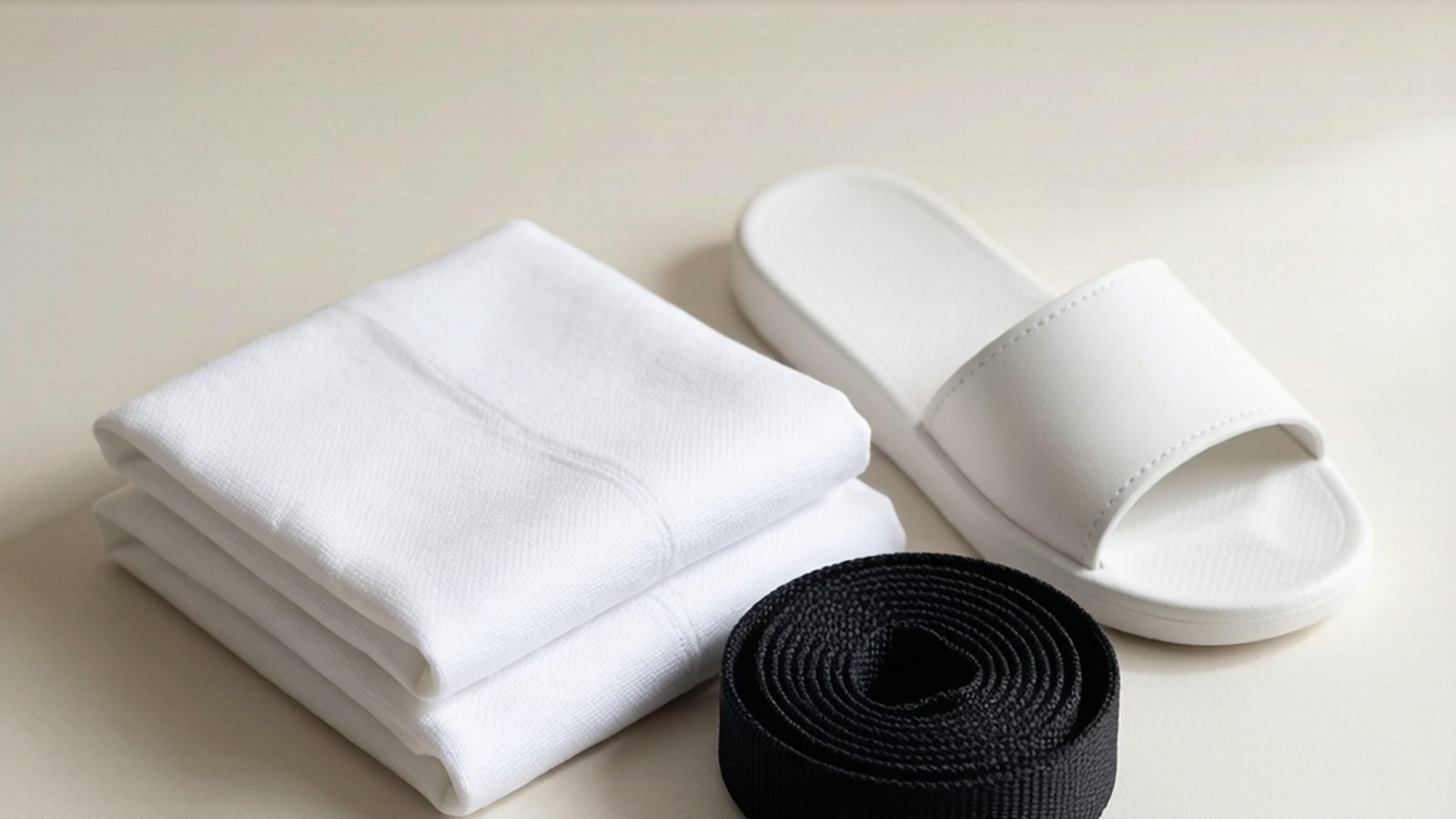
A complete ihram kit typically includes the two-piece seamless garment, a black woven belt (izar band), and sometimes a pair of slip-on sandals. Retailers often make the mistake of sourcing only the cloth and assuming customers will buy the belt elsewhere. In practice, pilgrims want a ready-to-go set, and kits outsell loose cloth by a wide margin during peak season.
Your action step here is to confirm the kit composition with your supplier and request consistent sizing for the belt and sandals. Mixing mismatched components from different factories creates returns and complaints you can avoid with one clarifying email.
Set Your MOQ and Buffer Stock Deliberately
Minimum order quantities for ihram kits usually start around a few hundred sets. Do not order the bare minimum. The Hajj season has almost no second chance — once the flights leave, unsold stock is stuck until next year, but understock means lost sales you can never recover. A deliberate 15% to 20% buffer above your confirmed pre-orders is a healthy target for this category.
Split your inventory into two waves. Ship the first wave early so it reaches shelves and online listings before the pre-Hajj rush. Hold the second wave as reserve stock to catch the late surge of last-minute pilgrims. This two-wave approach keeps cash flow steady and shelves full.
Plan Packaging for the Pilgrim Journey
Packaging is easy to overlook but matters more than it seems. Many pilgrims buy ihram kits at the airport or just before departure, so compact, tamper-sealed packaging travels well. If you serve the gift or group-travel market, consider a slightly premium folded presentation that a travel agent or mosque group can hand out as a set.
Confirm with your supplier whether kits arrive individually poly-bagged or bulk-packed. Individually packed kits save you labor at the warehouse and reduce the chance of pieces going missing before they reach the customer.
Frequently Asked Questions
When should I place my ihram kit order for Hajj?
Aim to finalize orders at least four months before the expected travel window. This protects production slots and avoids air-freight premiums.
Cotton or microfiber — which sells better?
Both sell, but cotton leads with experienced pilgrims and microfiber with first-time or luggage-limited travelers. A 60/40 cotton-to-microfiber split is a safe starting point.
Should I sell kits or just the cloth?
Complete kits consistently outperform loose cloth during peak season because pilgrims want a ready-to-use set. Stock kits as your core SKU.
How much buffer stock is reasonable?
A 15% to 20% buffer above confirmed pre-orders balances the risk of leftover stock against the cost of lost sales in a no-second-chance season.
Conclusion
Sourcing ihram kits for Hajj is less about finding a supplier and more about respecting a fixed calendar. Anchor your orders to the lunar timeline, choose your fabric mix with intent, build complete kits, and hold a deliberate buffer in two waves. Buyers who follow this action plan turn a stressful seasonal spike into a repeatable, profitable routine year after year.